


 Promisedland Casket
A Christian funeral follows a familiar rhythm for many families, but the meaning behind each part of the service is not always explained along the way.
Understanding what each element represents can help both grieving families and visiting guests feel more at ease, whether this is a lifelong tradition or an unfamiliar experience.
This guide walks through the wake, the service and the final committal. Families still deciding on the overall shape of the day may also find our guide on what happens during a funeral wake useful.
This guide is part of our Christian funeral services -- covering the practical arrangements and coordination available to families of this faith.
Part 1
The Wake
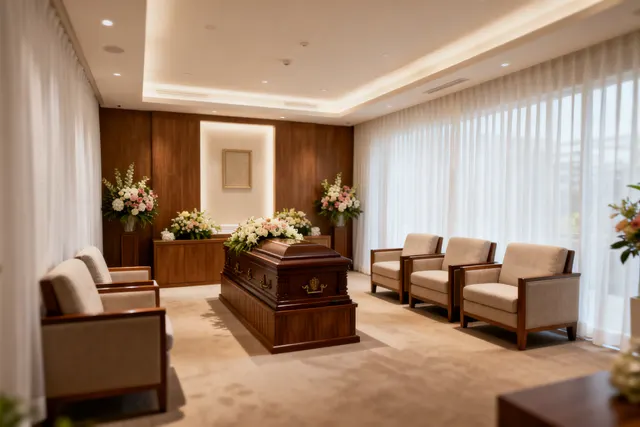
The wake gives relatives and friends the chance to pay their respects before the funeral service itself. Visitors are usually welcomed to sit with the family, view photographs of the deceased, and offer quiet words of comfort.
Short prayer sessions or hymn singing are often held during the wake, led by a pastor, church elder or family member.
Part 2
Scripture Readings
Bible passages are read during the service to offer comfort and reflect the Christian belief in eternal life. Common readings speak of hope, resurrection and God's comfort for those who grieve.
Family members are sometimes invited to choose or read a passage that held particular meaning for the deceased.
Part 3
Hymns and Music
Hymns are sung throughout the wake and funeral service as an expression of faith and shared comfort. Families often choose hymns that were meaningful to the deceased, alongside traditional favourites known to the wider congregation.
Music also gives visitors, regardless of their own beliefs, a way to participate respectfully in the service.
Part 4
The Eulogy
The eulogy is usually delivered by a close family member or friend, and sometimes by the pastor, recounting the life, faith and character of the deceased.
This is often the most personal part of the service, offering space to share memories that reflect who the person truly was.
Part 5
The Sermon
A pastor or church leader typically delivers a short sermon, connecting the scripture readings to the Christian understanding of death, grief and hope. This part of the service is intended to comfort the family and reaffirm shared beliefs.
Part 6
Holy Communion
Some denominations include Holy Communion as part of the funeral service, while others do not. This varies significantly between churches, so it is worth checking with the family's pastor or church in advance.
Families following Catholic tradition may notice additional differences in the structure of the Mass. Our guide to Catholic funeral services explains this in more detail.
Planning a Christian Funeral?
Our funeral directors regularly coordinate with churches and pastors to plan a service that reflects your family's faith and wishes.
Part 7
The Committal
The final part of the service takes place at the crematorium or burial ground, where the pastor leads a short prayer of committal, entrusting the deceased to God's care.
This is often a quieter, more intimate moment, attended mainly by close family and friends.
Part 8
Flowers and Tributes
Floral wreaths and tributes are commonly displayed at the wake as a sign of respect and remembrance. Some families request donations to a church or charity in lieu of flowers, which is entirely acceptable and should simply be communicated to guests in advance.
For visitors
Etiquette for Guests
- Modest, respectful attire is generally appropriate.
- Guests are welcome to join in hymns and prayers, but are not obliged to do so if unfamiliar or uncomfortable.
- A brief, sincere condolence to the family is always appreciated.
- Photography should be avoided unless specifically welcomed by the family.
Practical reference
Christian Funeral Planning Checklist
Common questions
Frequently Asked Questions
Do non-Christian guests need to participate in the prayers?
No. Guests are welcome to observe respectfully without joining in hymns or prayers if they are not comfortable doing so.
Is Holy Communion always part of a Christian funeral?
Not always. This depends on the specific denomination and the family's preference. It is best confirmed with the church in advance.
Who usually delivers the eulogy?
A close family member or friend typically delivers the eulogy, though the pastor may also contribute reflections on the deceased's life and faith.
How is a Catholic funeral different?
Catholic funerals often follow a more structured Mass. Read our guide to Catholic funeral services for more detail.
Can Promisedland Casket help coordinate with our church?
Yes. Visit our contact page to speak with our funeral team about coordinating with your pastor or church.
Final guidance
A Service Rooted in Faith and Comfort
Each part of a Christian funeral, from the wake to the final committal, is designed to offer comfort to the grieving family and honour the deceased's faith. Understanding the meaning behind these customs can help everyone present feel more at peace during the service.
Read more about our Christian funeral services or contact our funeral directors to begin planning.
Continue Your Planning
What Happens During a Funeral Wake?
Learn what visitors and family members can generally expect during a wake.
Read article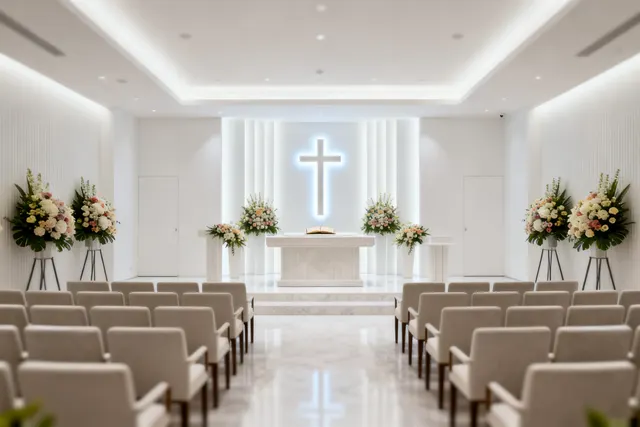
Christian Funeral Services
Explore worship services, hymns, prayers and the role of the church community.
Explore Christian services
What Happens After the Service
A gentle guide to the weeks that follow, and what still needs doing.
Read articleCompassionate Funeral Support When Your Family Needs It
Speak with our funeral team for guidance on the immediate next steps, funeral arrangements and wake planning.