


 Promisedland Casket
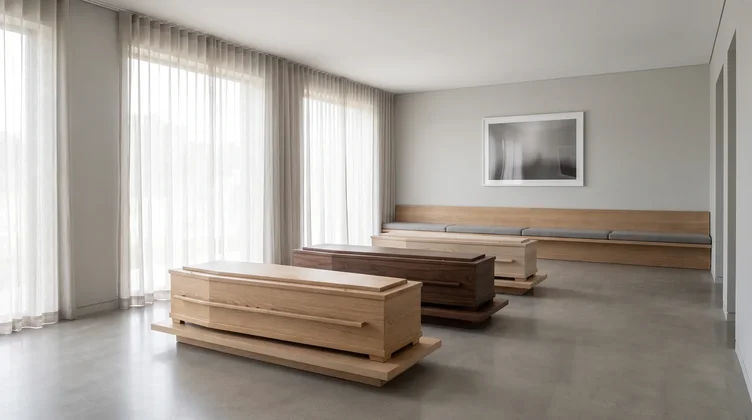
Choosing a casket is one of the most significant decisions families make when arranging a funeral. Although it may seem like a simple purchase, a casket represents far more than a container for the deceased. It is often the focal point of the funeral service, the final resting place during the wake, and one of the last visible tributes that family and friends will remember.
For many families in Singapore, this is also the first time they have ever needed to choose a casket. The unfamiliar terminology, the wide range of materials, finishes and styles, together with the emotional stress of losing a loved one, can make the process feel overwhelming.
Understanding the different types of Singapore caskets, how they are used, and the factors to consider when choosing one can help families make informed decisions during a difficult time.
Whether you are arranging a Christian funeral, Catholic funeral, Freethinker funeral or another type of funeral service, selecting an appropriate casket allows you to honour the wishes of the deceased while creating a respectful and dignified farewell.
This comprehensive guide explains everything you need to know about Singapore caskets, including:
- What a casket is
- The difference between a casket and a coffin
- Why choosing the right casket matters
- Common casket materials
- Wooden and premium hardwood caskets
- Burial and cremation caskets
- Religious considerations
- Personalisation options
- Common misconceptions
- Frequently asked questions
By the end of this guide, you will have a much clearer understanding of how to choose a casket that reflects both practical needs and the memory of your loved one.
This guide is part of our complete funeral services overview -- covering packages, religious traditions, venues and pricing for every stage of the process.
Getting started
What Is a Casket?
A casket is a specially designed funeral container that respectfully holds the body of the deceased throughout various stages of the funeral process. It is used during transportation, funeral wakes, viewing sessions, religious ceremonies and, ultimately, burial or cremation.
Unlike many other funeral items, the casket often becomes the visual centrepiece of the farewell ceremony. During the wake, family members and friends gather around the casket to pay their final respects, offer prayers, share memories and support one another.
For this reason, many families place considerable thought into selecting a casket that reflects the personality, values and wishes of the deceased.
Modern Singapore caskets are designed with both dignity and practicality in mind. Depending on the family's preferences, they may feature elegant wood finishes, luxurious fabric interiors, personalised details or simple, understated designs.
Although appearance is important, the primary purpose of a casket is to provide respectful care for the deceased while supporting the various practical requirements of the funeral.
These may include:
- Safe transportation of the deceased
- Temporary placement during the wake
- Viewing by family members
- Religious ceremonies
- Final burial or cremation
The design of a casket also allows funeral directors to prepare the deceased respectfully while ensuring the family can spend meaningful time saying goodbye.
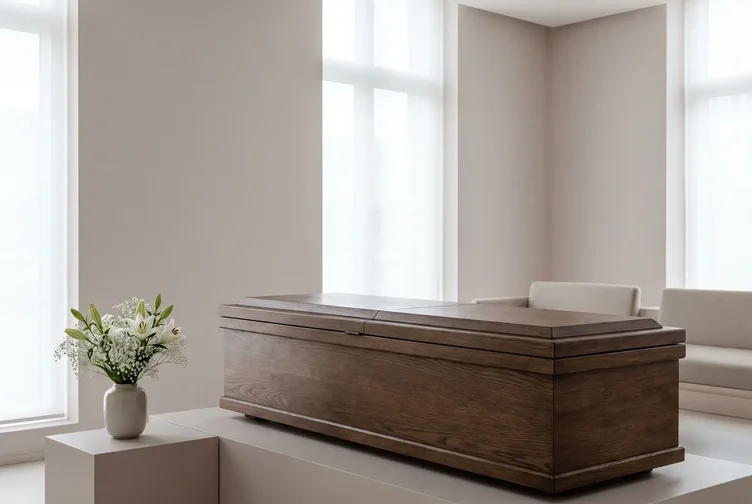
Origins
Why Do We Use Caskets?
Throughout history, societies around the world have used containers to protect and honour those who have passed away.
While designs have evolved over thousands of years, the underlying purpose remains remarkably similar.
A casket serves several important functions.
Protecting the Deceased
One of the primary purposes of a casket is to provide respectful care for the body of the deceased throughout the funeral process.
From the moment the deceased comes into the care of the funeral director until the final farewell, the casket provides a secure and dignified environment.
This is particularly important during:
- Transportation
- Wake preparations
- Religious ceremonies
- Family visitations
- Burial or cremation
Providing a Place for Family to Say Goodbye
For many families, the funeral wake is an opportunity to spend precious final moments together.
The casket allows loved ones to:
- Pay their respects
- Offer prayers
- Place flowers
- Say goodbye
- Share memories
These moments often become an important part of the grieving process.
Reflecting Respect
Choosing an appropriate casket demonstrates care and respect for the deceased.
Some families prefer:
- Traditional polished wood
Others may prefer:
- Modern minimalist finishes
Some wish to personalise the casket according to the deceased's favourite colour, hobbies or religious beliefs.
There is no universally “correct” choice.
The most appropriate casket is one that respectfully honours the life being remembered.
Supporting Religious Traditions
Different religions observe different funeral customs.
For example, Christian funerals often include an open casket during the wake.
Catholic funeral services may involve church ceremonies before burial or cremation.
Freethinker funerals generally allow greater flexibility regarding the style and appearance of the casket.
Understanding these traditions helps families select an appropriate design while respecting their loved one's beliefs.
Terminology
Casket vs Coffin: What's the Difference?
One of the most common questions families ask is whether a casket is the same as a coffin.
Although many people use these words interchangeably, they are technically different.
In Singapore, the term casket is used much more frequently by funeral directors and funeral service providers.
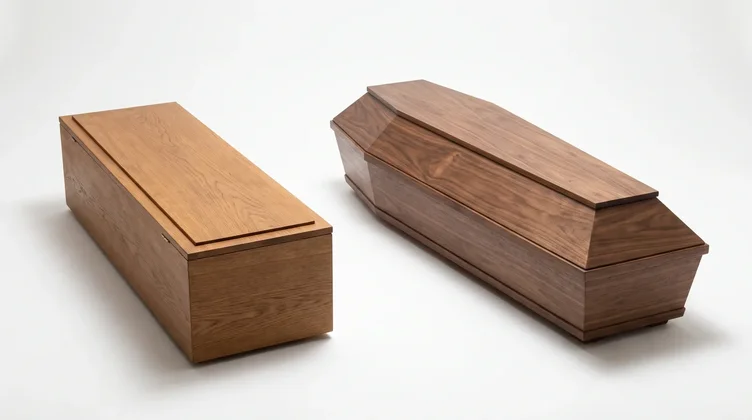
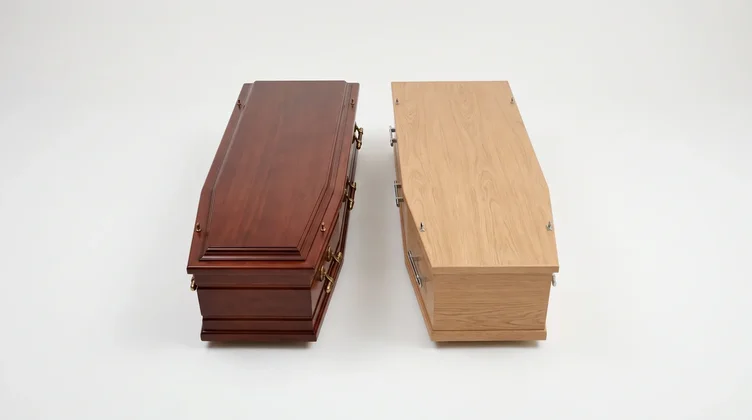
Shape
A casket is rectangular.
It has:
- Four straight sides
- Equal width throughout most of its length
- Hinged lid
- Flat top
A coffin, on the other hand, has six sides.
It widens around the shoulders before tapering towards the head and feet.
This distinctive shape is commonly associated with historical European funerals.
Appearance
Modern caskets generally appear:
- More refined
- More symmetrical
- More contemporary
Many Singapore funeral providers therefore use caskets for almost all funeral arrangements.
Interior
Caskets usually include:
- Upholstered interiors
- Cushioned pillows
- Decorative lining
- Premium fabrics
Traditional coffins often have much simpler interiors.
Lid Design
A casket generally has a single full lid, or a split lid.
The split lid allows the upper half to remain open during viewing while the lower half remains closed.
This design is commonly seen in Christian funeral services.
Usage in Singapore
Today, almost every funeral service provider in Singapore refers to their products as Singapore caskets, regardless of whether members of the public might casually use the word “coffin.”
When speaking with funeral directors, you will almost always hear the term casket rather than coffin.
Background
The History of Caskets
Understanding how caskets evolved helps explain why they remain an important part of modern funeral traditions.
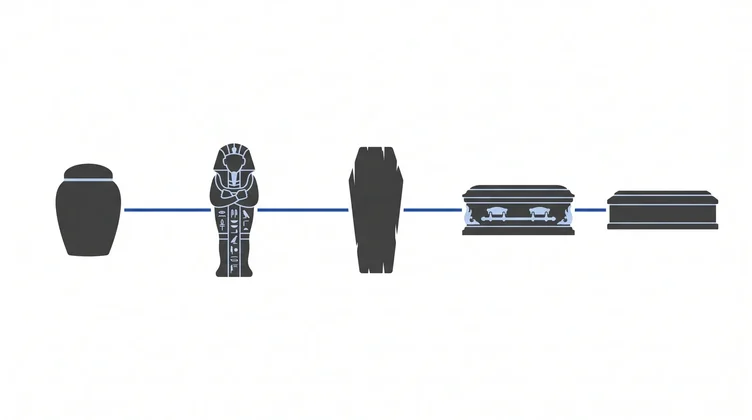
Ancient Civilisations
Thousands of years ago, early civilisations buried their dead using simple containers made from locally available materials.
These included:
- Stone
- Clay
- Wood
- Reed
- Woven fibres
The choice often depended on local customs and available resources.
Ancient Egypt
The Egyptians are perhaps the most famous for developing elaborate burial containers.
Their sarcophagi were richly decorated and intended to protect the deceased for eternity.
Although modern Singapore caskets are very different, the underlying idea of honouring the deceased with dignity remains similar.
Medieval Europe
During the Middle Ages, wooden coffins became increasingly common.
Craftsmen produced handmade containers using oak and other hardwoods.
Many featured:
- Religious carvings
- Decorative handles
- Iron fittings
Victorian Era
By the nineteenth century, funeral practices became more formal.
The casket gradually replaced the traditional coffin in many countries.
Manufacturers began producing:
- Upholstered interiors
- Brass fittings
- Polished wood finishes
- Decorative corners
- Elegant hardware
Many of these design features continue to influence modern caskets today.
Modern Singapore
Today's Singapore funeral industry offers an extensive variety of caskets suitable for different funeral traditions.
Advances in manufacturing now provide:
- Premium hardwood caskets
- Lightweight veneer caskets
- Cremation caskets
- Eco-conscious options
- Personalised finishes
Families are therefore able to choose a casket that balances appearance, practicality and personal preference.
Significance
Why the Choice of Casket Matters
Some people wonder whether the choice of casket truly makes a difference.
In reality, the casket often becomes one of the most memorable visual elements of the funeral.
When relatives and friends arrive at the wake, the casket is usually the first thing they notice.
A thoughtfully chosen casket can help create a peaceful and respectful atmosphere while reflecting the personality of the deceased.
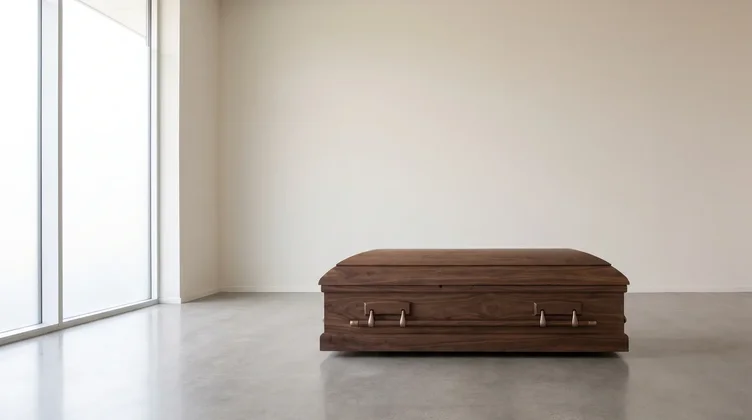
For example, some families choose a polished walnut finish to reflect elegance and tradition, while others prefer a simple white casket that conveys peace and purity.
Ultimately, there is no “best” Singapore casket for every family.
The right choice depends on factors such as:
- The wishes of the deceased
- Religious beliefs
- Funeral arrangements
- Burial or cremation
- Personal preferences
- Budget considerations
Rather than focusing solely on appearance, families should view the casket as one part of a larger farewell that celebrates the life and legacy of someone deeply loved.
Beyond the casket
Choosing a Funeral Provider Matters Too
While selecting a casket is important, families should remember that the funeral experience depends on much more than the casket itself.
An experienced funeral provider helps coordinate every aspect of the funeral, including transportation of the deceased, preparation, wake arrangements, venue coordination and guidance throughout the entire process.
If you are arranging a funeral in Singapore, learning more about professional funeral services can help you understand the support available during this difficult time.
Likewise, families planning ahead may wish to explore funeral pre-planning, which allows important wishes—including casket preferences—to be discussed well in advance, reducing uncertainty for loved ones in the future.
Part two
Types of Singapore Caskets, Materials & Construction
We explored what a casket is, how it differs from a coffin, its history, and why selecting the right casket is an important part of honouring a loved one.
This section takes a closer look at the different Singapore caskets available today, the materials used to manufacture them, how they are constructed, and which options may be suitable for different funeral arrangements.
Understanding these differences allows families to make informed decisions while avoiding confusion during an already emotional period.
The options
Types of Singapore Caskets
One of the biggest misconceptions is that every casket is essentially the same. In reality, there are many different types of caskets available in Singapore, each designed for specific funeral preferences, practical requirements and aesthetic styles.
Although the exterior appearance is often the first thing families notice, factors such as construction, materials, intended use and personal preferences are equally important.
Wooden Caskets
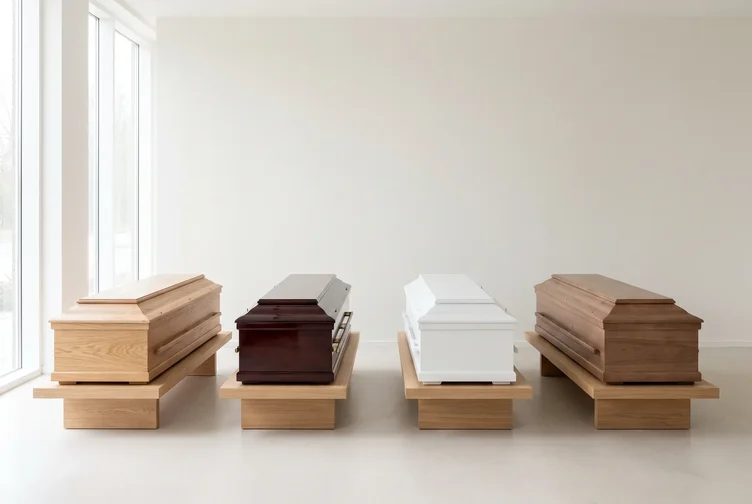
Wooden caskets remain the most commonly selected type of Singapore casket.
They have been used for generations because they combine elegance, warmth and timeless appeal. Many families feel that natural wood provides a respectful appearance suitable for both traditional and contemporary funeral services.
Wooden caskets are suitable for:
- Christian funerals
- Catholic funerals
- Freethinker funerals
- Burial services
- Cremation services (depending on construction and materials)
Modern wooden caskets are available in a wide variety of finishes ranging from light natural timber to rich, dark polished hardwoods.
Some feature a glossy piano-style finish, while others retain the natural texture and grain of the wood.
Solid Hardwood Caskets
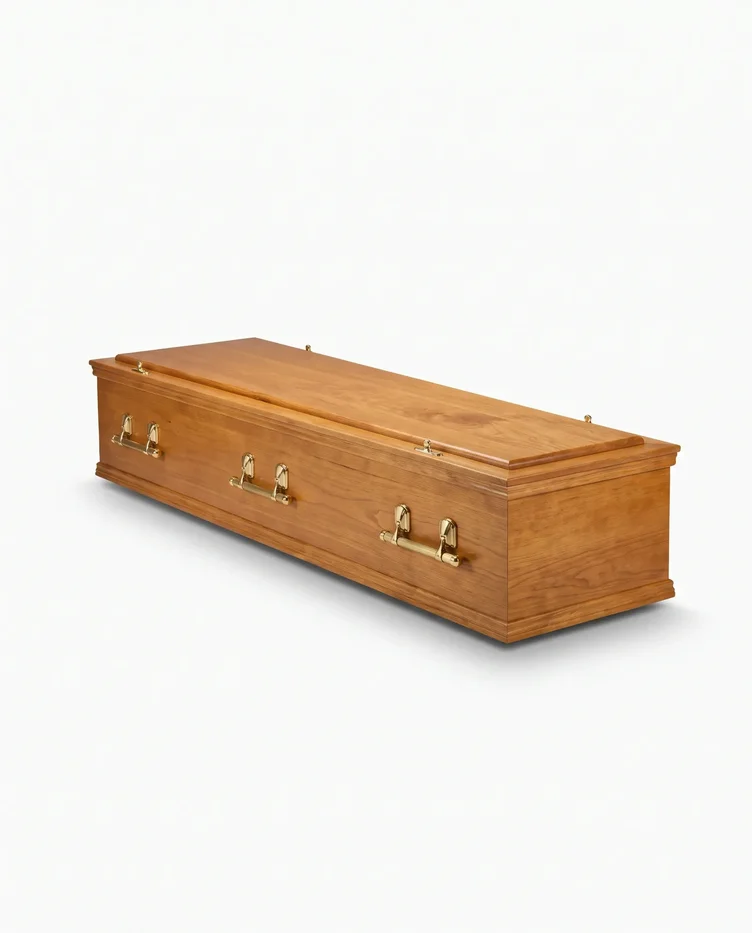
Solid hardwood caskets are generally considered premium products.
Unlike engineered materials, solid hardwood is produced from a single species of timber, giving every casket its own unique grain pattern.
Popular hardwoods include:
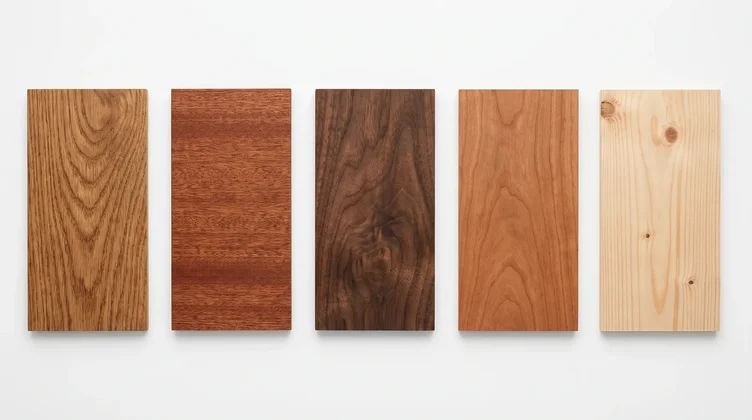
Oak
Oak has long been associated with strength and longevity.
Characteristics include:
- Distinctive grain pattern
- Excellent durability
- Traditional appearance
- Medium to dark colouring
Oak caskets remain popular among families seeking a timeless and dignified presentation.
Mahogany
Mahogany is one of the most recognisable premium hardwoods.
It is valued for:
- Rich reddish-brown colour
- Smooth grain
- Elegant appearance
- Luxury finish
Mahogany caskets are frequently selected for traditional church funerals and formal ceremonies.
Walnut
Walnut offers a darker, sophisticated appearance.
Advantages include:
- Deep chocolate colouring
- Fine grain
- Luxurious finish
- Modern elegance
Walnut is often chosen when families prefer understated luxury.
Cherry
Cherry wood gradually develops a richer colour over time.
Its appearance is warm, refined, elegant and distinctive.
Many families appreciate its softer appearance compared with darker hardwoods.
Pine
Pine is lighter in colour and often associated with simplicity.
It may appeal to families seeking:
- Traditional styling
- Natural appearance
- Minimalist design
Veneer Caskets
Not every wooden-looking casket is made entirely from solid hardwood.
Many Singapore caskets use high-quality wood veneers.
A veneer casket consists of:
- Engineered wood structure
- Thin hardwood veneer
- Protective finish
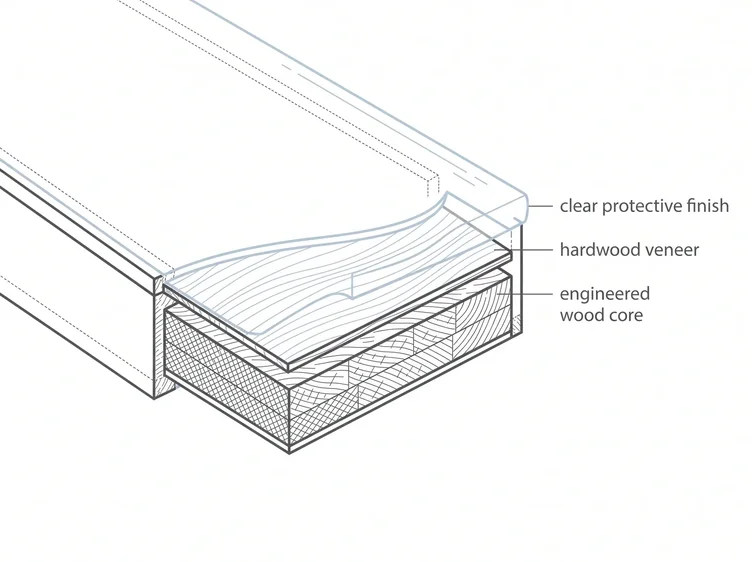
When professionally manufactured, veneer caskets can closely resemble solid hardwood while offering greater affordability.
Advantages include:
- Lower weight
- Attractive appearance
- Consistent finish
- Wide variety of colours
- Efficient use of timber resources
Many families are pleasantly surprised by the quality of modern veneer caskets.
MDF and Engineered Wood Construction
Some caskets are manufactured using medium-density fibreboard (MDF) or other engineered wood products.
These materials offer:
- Stable construction
- Smooth painted finishes
- Consistent dimensions
- Cost-effective manufacturing
Because the exterior is often painted or veneered, many people cannot distinguish engineered wood from solid hardwood simply by appearance.
Premium Luxury Caskets
Luxury caskets emphasise craftsmanship and presentation.
They often feature:
- Hand-polished finishes
- Decorative corner details
- Premium hardware
- High-quality upholstery
- Enhanced interior cushioning
- Elegant handles
- Soft-close lid mechanisms
Some luxury models also incorporate custom interior embroidery, personalised nameplates or decorative motifs chosen by the family.
Simple Contemporary Caskets
Not every family wants elaborate designs.
Increasingly, many families prefer modern minimalist caskets.
These typically feature:
- Clean lines
- Simple handles
- Smooth satin finish
- Minimal decorative hardware
- Neutral colours
Minimalist designs often place greater emphasis on the funeral service itself rather than ornate decoration.
White Caskets
White remains one of the most requested colours in Singapore.
White caskets are frequently associated with:
- Peace
- Purity
- Hope
- Serenity
Many Christian and Catholic families choose white caskets, particularly when the funeral service celebrates the person's faith and the hope of eternal life.
White finishes may range from:
- Matte white
- Satin white
- Gloss white
- Pearl white
Some include silver or gold-coloured hardware to complement the overall appearance.
Dark Wood Caskets
Dark wood remains equally popular.
Examples include:
- Walnut
- Mahogany
- Ebony-style finishes
- Dark oak
These finishes convey:
- Tradition
- Dignity
- Formality
- Timeless elegance
Dark polished wood continues to be one of the most recognisable styles of Singapore caskets.
Cremation Caskets
Many families ask whether a special casket is required for cremation.
The answer depends on the materials used and the crematorium's requirements.
Generally, cremation caskets are designed using materials that are suitable for the cremation process.
These may include:
- Solid wood
- Engineered wood
- Combustible interior materials
Funeral directors are familiar with the applicable requirements and can recommend suitable options based on the planned arrangements.
Burial Caskets
Burial caskets may place greater emphasis on long-term structural integrity and traditional styling.
Families selecting burial often consider:
- Wood species
- Exterior finish
- Interior fabric
- Overall presentation during the funeral service
Many burial caskets are available in both traditional and contemporary styles.
Children's Caskets
One of the most emotionally difficult situations involves the funeral of a child.
Specially designed children's caskets are available in smaller sizes.
These often feature:
- Softer colours
- Gentle interior fabrics
- Smaller dimensions
- Delicate detailing
The design focuses on providing a respectful and compassionate farewell.
Infant Caskets
Infant caskets are specially designed for newborns and very young children.
These are available in appropriately sized dimensions while maintaining the same level of dignity and care found in adult caskets.
Bariatric Caskets
Standard adult caskets accommodate the majority of individuals.
However, larger caskets are available for individuals who require additional width or weight capacity.
These are commonly referred to as bariatric caskets.
They feature:
- Wider dimensions
- Reinforced construction
- Stronger hardware
- Additional structural support
Funeral providers can arrange these discreetly when required.
Eco-Friendly Caskets
Environmental awareness has encouraged interest in more sustainable funeral products.
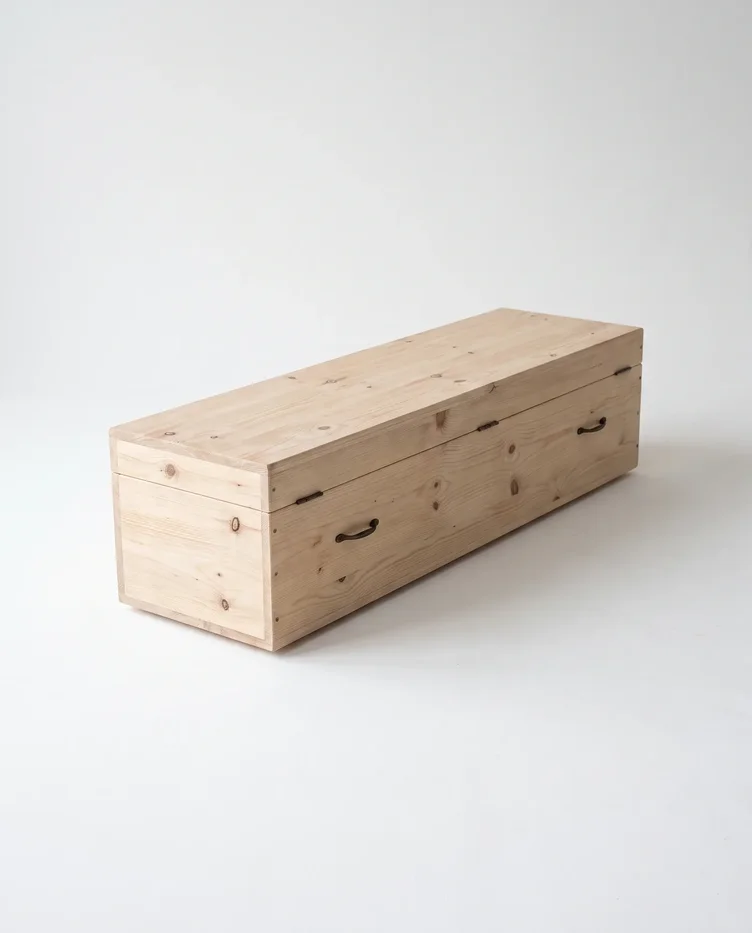
Eco-friendly caskets may use:
- Sustainably sourced timber
- Lower-emission finishes
- Simpler construction
- Reduced metal components
Some families choose these options to reflect personal environmental values.
Availability varies between funeral providers.
Behind the scenes
How Singapore Caskets Are Manufactured
Many people never consider how a casket is actually made.
Modern manufacturing combines traditional woodworking with advanced machinery to produce consistent quality while maintaining craftsmanship.
The process generally includes several stages.
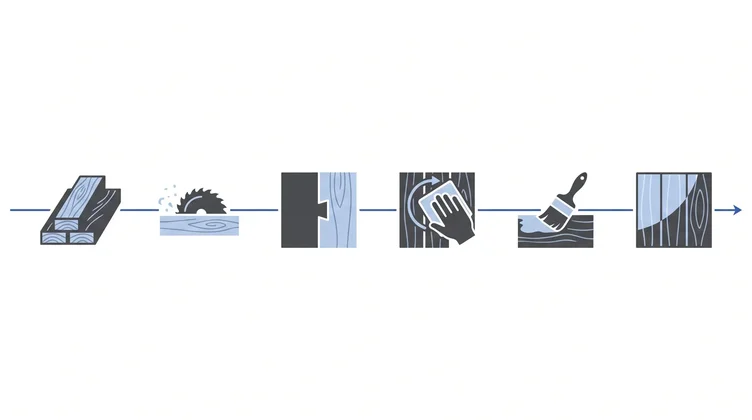
Timber Selection
The process begins with selecting suitable timber.
Manufacturers evaluate:
- Grain quality
- Moisture content
- Colour consistency
- Structural integrity
Higher-quality timber generally produces a more refined finished appearance.
Cutting and Shaping
Computer-controlled machinery precisely cuts the timber into the required components.
These include:
- Side panels
- Base
- Lid
- End panels
- Internal supports
Precision cutting ensures proper alignment during assembly.
Assembly
The individual components are joined together using specialised woodworking techniques.
Depending on the design, manufacturers may use:
- Reinforced joints
- Internal supports
- High-strength adhesives
- Mechanical fasteners
The objective is to create a stable and secure structure.
Sanding
Before finishing, every visible surface is carefully sanded.
This produces:
- Smooth texture
- Uniform appearance
- Better stain absorption
- Improved finish quality
High-quality sanding is one characteristic of premium Singapore caskets.
Staining
Where natural timber is used, stains may enhance the wood's colour while preserving the grain.
Popular stain colours include:
- Walnut
- Cherry
- Mahogany
- Oak
- Espresso
- Natural
The stain influences the overall character of the casket.
Protective Finish
A protective coating is then applied.
Depending on the desired appearance, finishes may be:
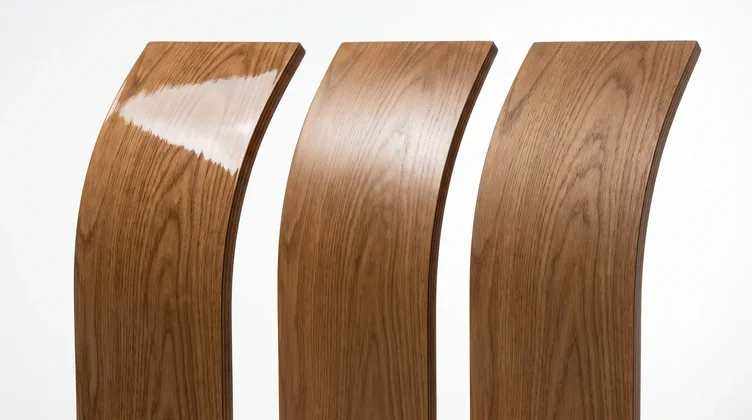
High Gloss
Produces:
- Reflective surface
- Rich colour
- Premium appearance
Satin Finish
Offers:
- Softer reflection
- Modern elegance
- Less visible fingerprints
Matte Finish
Provides:
- Natural appearance
- Contemporary style
- Minimal reflections
Each finish creates a distinctly different visual impression.
Interior Construction
The interior of a casket receives just as much attention as the exterior.
Common components include:
- Mattress
- Pillow
- Side lining
- Lid lining
- Interior fabric
- Padding
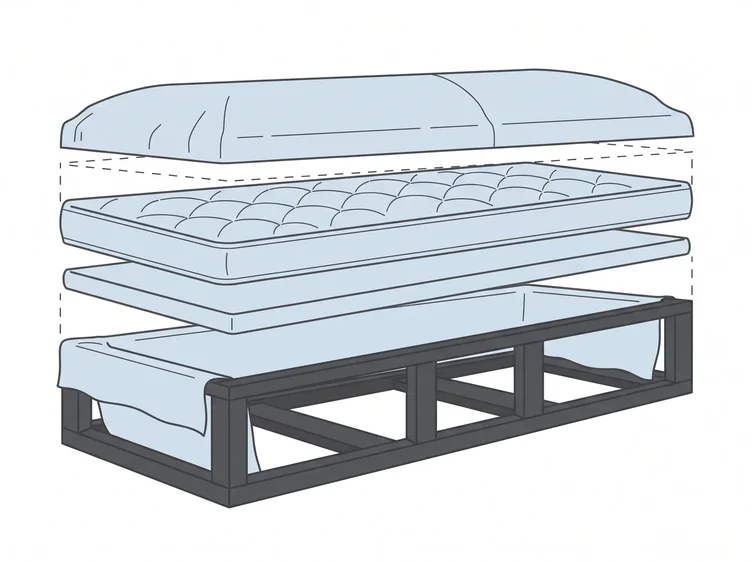
These elements provide both comfort and a respectful presentation during viewing.
Interior Fabrics
Several fabric choices are commonly available.
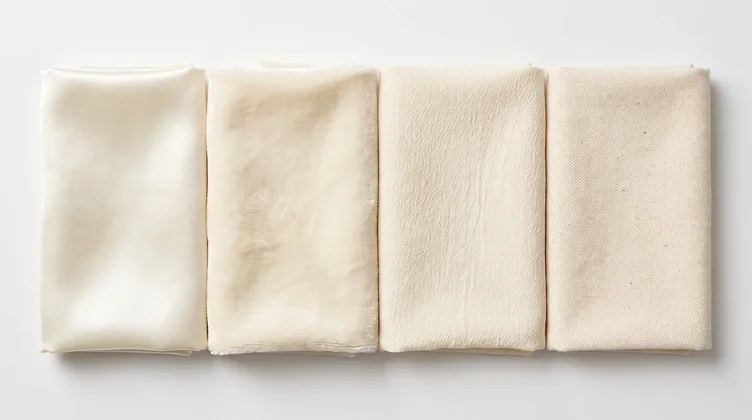
Satin
Perhaps the most popular option.
Satin offers:
- Smooth texture
- Elegant appearance
- Soft sheen
Velvet
Velvet provides:
- Luxurious feel
- Rich appearance
- Soft texture
Crepe
Crepe is often selected for its understated appearance.
Advantages include:
- Simplicity
- Traditional styling
- Comfortable texture
Cotton
Cotton remains a practical and natural choice.
Many families appreciate its clean, understated appearance.
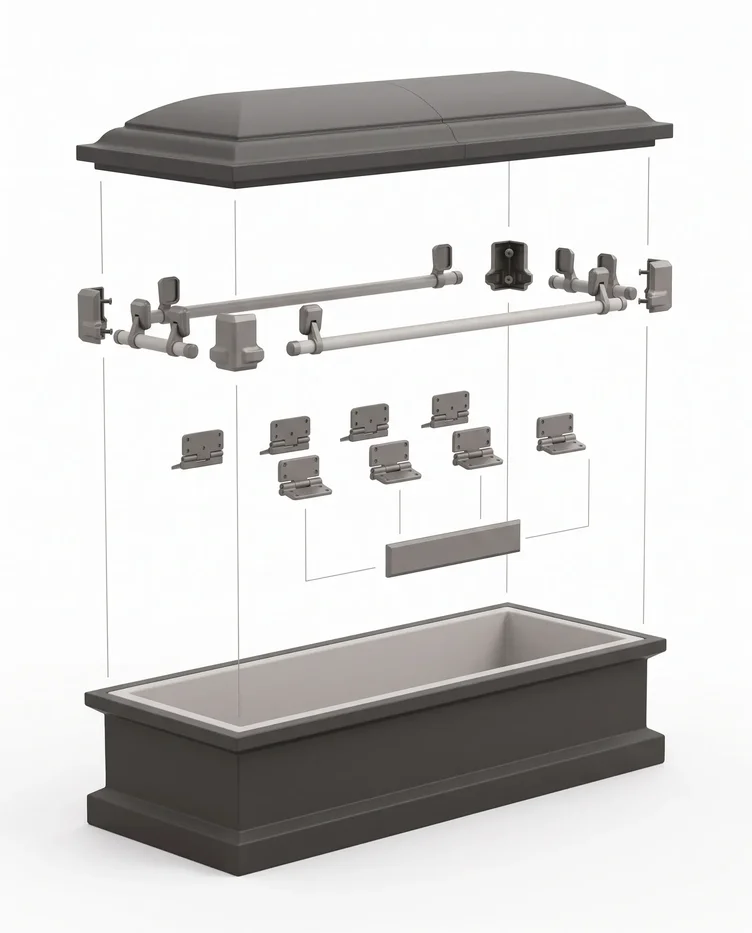
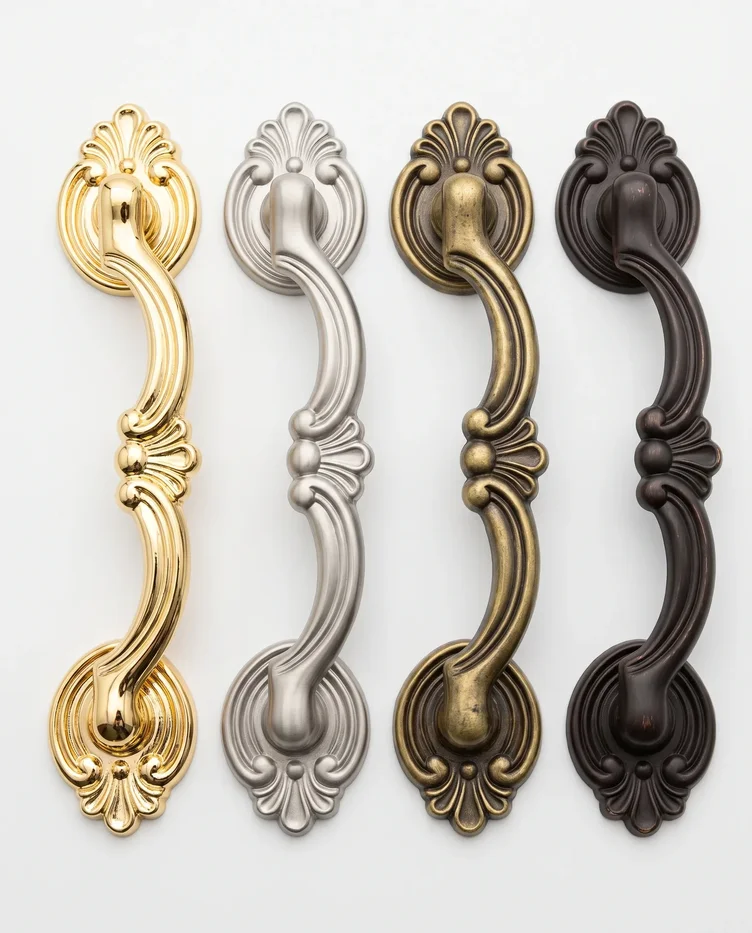
Hardware
The decorative hardware contributes significantly to the overall appearance.
This may include:
- Handles
- Decorative corners
- Nameplates
- Lid hardware
- Hinges
Finishes commonly include:
- Gold
- Antique brass
- Silver
- Bronze
- Satin nickel
Although largely decorative, quality hardware also contributes to ease of transportation.
Craftsmanship Matters
While photographs may make different caskets appear similar, craftsmanship often distinguishes premium products from lower-quality alternatives.
Attention to detail can be seen in:
- Consistent wood grain
- Smooth joints
- Even stain application
- High-quality upholstery
- Precision hardware installation
- Durable construction
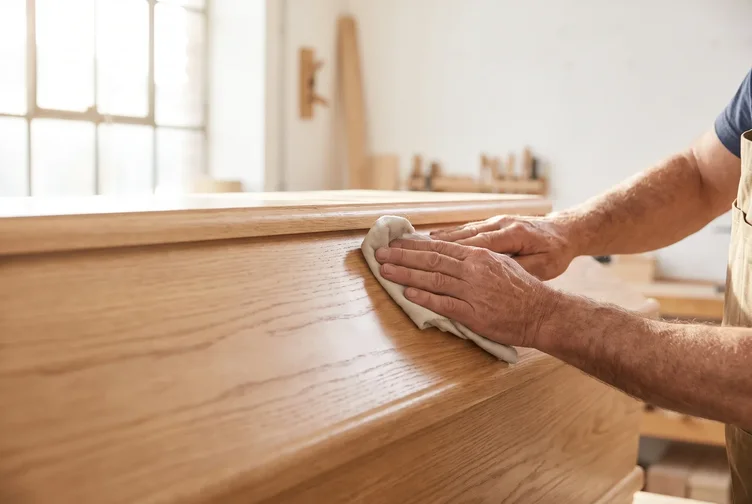
These details contribute to a dignified presentation throughout the funeral service.
Coming up
Looking Ahead
Now that we've explored the different types of Singapore caskets, their materials and construction, the next section will focus on how families choose the most suitable casket for their loved one.
We'll cover:
- How to choose the right casket
- Factors that influence casket selection
- Religious considerations
- Personalisation options
- Open vs closed casket services
- Common mistakes to avoid
- Understanding casket pricing factors
- Practical advice for families arranging a funeral
Part three
How to Choose the Right Singapore Casket
In the previous sections, we explored the different types of Singapore caskets, the materials used in their construction, and how they are manufactured. While understanding these technical details is important, many families still ask the same question:
“How do I know which casket is the right one?”
There is rarely a single correct answer.
Every family has different traditions, beliefs, preferences and circumstances. The ideal casket is one that respectfully honours the deceased while meeting the practical needs of the funeral.
This section explains the most important factors families should consider before selecting a casket.
Start With the Wishes of the Deceased
Whenever possible, the wishes of the deceased should guide the family's decision.
Some people openly discuss their funeral preferences during their lifetime. Others may have recorded their wishes through funeral pre-planning or shared them informally with family members.
These wishes might include:
- Preference for burial or cremation
- Preferred wood finish
- Religious symbols
- Simplicity or luxury
- Favourite colours
- Personal clothing
- Type of funeral service
Honouring these preferences can provide comfort to family members by ensuring the funeral reflects the person's own values and personality.
If no specific wishes were expressed, families often select a casket that best reflects how the deceased lived and how they would wish to be remembered.
Consider the Type of Funeral Service
The style of the funeral often influences the type of casket selected.
A formal church service may call for a traditional polished hardwood casket, while a private family farewell may be more suited to a simple contemporary design.
Some families prefer understated elegance, while others choose elaborate floral arrangements and decorative finishes.
Neither approach is more respectful than the other.
The purpose is to create a farewell that feels meaningful to those attending.
Burial or Cremation
One of the earliest decisions families usually make is whether the deceased will be buried or cremated.
This affects several aspects of funeral planning, including the choice of casket.
Burial
Families arranging a burial often focus on:
- Traditional appearance
- Premium wood finishes
- Elegant presentation
- Long-standing family traditions
The casket will usually remain visible throughout the funeral service before the burial takes place.
Cremation
Families choosing cremation also have many casket options.
The funeral service and viewing may still be held before cremation.
For this reason, many cremation caskets are designed to offer the same dignified appearance while using materials appropriate for the cremation process.
Your funeral provider will advise on suitable choices based on the planned arrangements.
Consider the Personality of the Deceased
A casket can reflect the individual whose life is being celebrated.
Some families choose a design that mirrors the person's character.
For example:
- Someone known for simplicity may be remembered with a clean, natural wood finish.
- Someone who appreciated traditional craftsmanship may be honoured with polished hardwood.
- A person who valued elegance may be remembered through a premium high-gloss finish with luxurious interior fabrics.
Rather than focusing solely on appearance, many families ask themselves: “Would this feel like them?”
That simple question often makes the decision much easier.
Religious Considerations
Religious traditions sometimes influence casket selection.
Understanding these customs helps families choose respectfully.
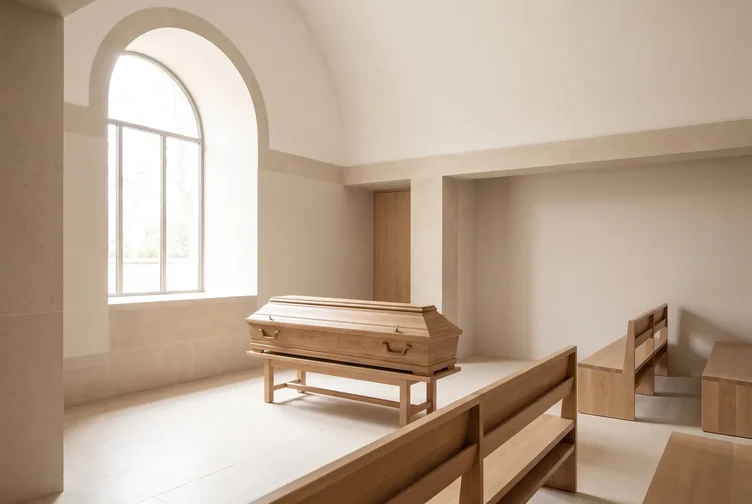
Christian Funeral Services
Christian funeral services often emphasise hope, remembrance and celebrating the life of the deceased.
Many Christian families choose:
- Wooden caskets
- White interiors
- Floral arrangements
- Cross motifs
- Natural timber finishes
Open-casket viewings are also common in many Christian funerals.
Families interested in Christian funeral arrangements may wish to learn more about Christian funeral services.
Catholic Funeral Services
Catholic funeral traditions usually include vigil prayers, funeral Mass and a committal service.
Many Catholic families choose traditional polished wooden caskets that complement the solemn nature of the liturgy.
Common choices include:
- Mahogany
- Walnut
- Oak
- White caskets
More information is available about Catholic funeral services.
Freethinker Funeral Services
Freethinker funerals generally allow greater flexibility.
The emphasis is often placed on celebrating the person's life rather than following religious customs.
Families may therefore choose:
- Modern minimalist designs
- Contemporary finishes
- Personalised colours
- Unique floral displays
Learn more about Freethinker funeral services.
Viewing Preferences
Another consideration is whether the family intends to have an open-casket viewing.
Many funeral services include a period where family and close friends may spend quiet moments paying their final respects.
During these occasions, the appearance of both the deceased and the casket contributes to the overall atmosphere of the farewell.
Some families prefer:
- Full open casket
- Half-open casket
- Closed casket
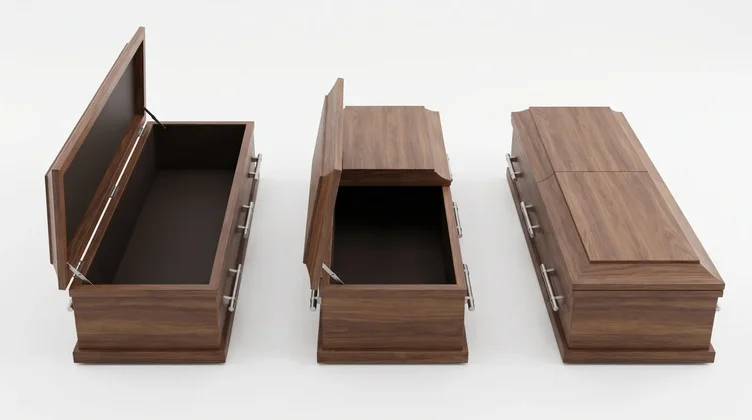
The decision depends on family wishes, religious customs and practical considerations.
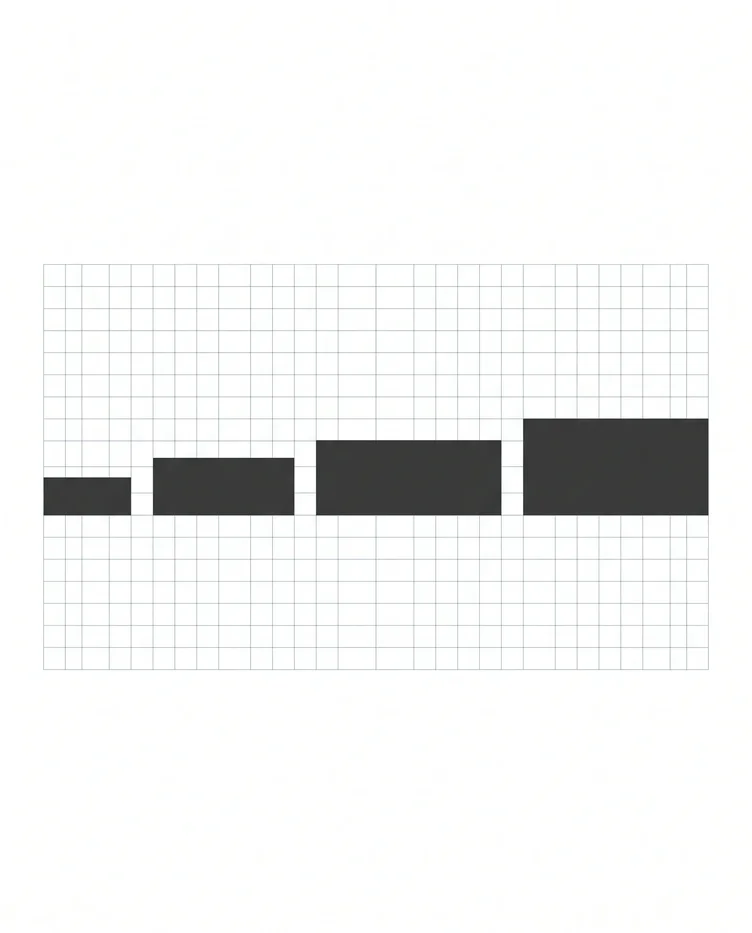
Casket Size
Selecting the correct size is essential.
Most adults use a standard-sized casket.
However, funeral providers can also arrange:
- Larger widths
- Longer lengths
- Bariatric caskets
- Children's caskets
- Infant caskets
Choosing the appropriate size ensures dignity during transportation, viewing and the funeral service.
Interior Fabrics
Families are often surprised by the number of interior options available.
Popular materials include:
- Satin
- Velvet
- Cotton
- Crepe
The interior colour may also vary.
Common colours include:
- White
- Ivory
- Champagne
- Cream
- Soft silver
These details are not merely decorative.
They help create a calm and peaceful presentation during the wake.
Exterior Colours
Although natural wood remains popular, Singapore caskets are available in a variety of finishes.
Examples include:
- White
- Ivory
- Walnut
- Mahogany
- Oak
- Cherry
- Dark espresso
- Satin natural wood
- High-gloss piano finish
Each finish creates a different impression.
Families should choose the style they feel best reflects the deceased.
Hardware and Decorative Details
Small details often make a significant difference.
Examples include:
- Gold handles
- Silver handles
- Decorative corners
- Name plates
- Memorial emblems
- Crosses
- Floral accents
These finishing touches contribute to the overall presentation without overwhelming the simplicity of the farewell.
Personalising a Singapore Casket
Many modern funeral services include personalised elements.
Personalisation allows families to create a farewell that reflects the unique life of the deceased.
Examples include:
- Favourite flowers
- Family photographs
- Personal clothing
- Religious items
- Meaningful keepsakes
- Memory boards
- Memorial videos
Some funeral providers can also arrange customised interior embroidery or engraved name plates.
These additions often become treasured memories for family members.
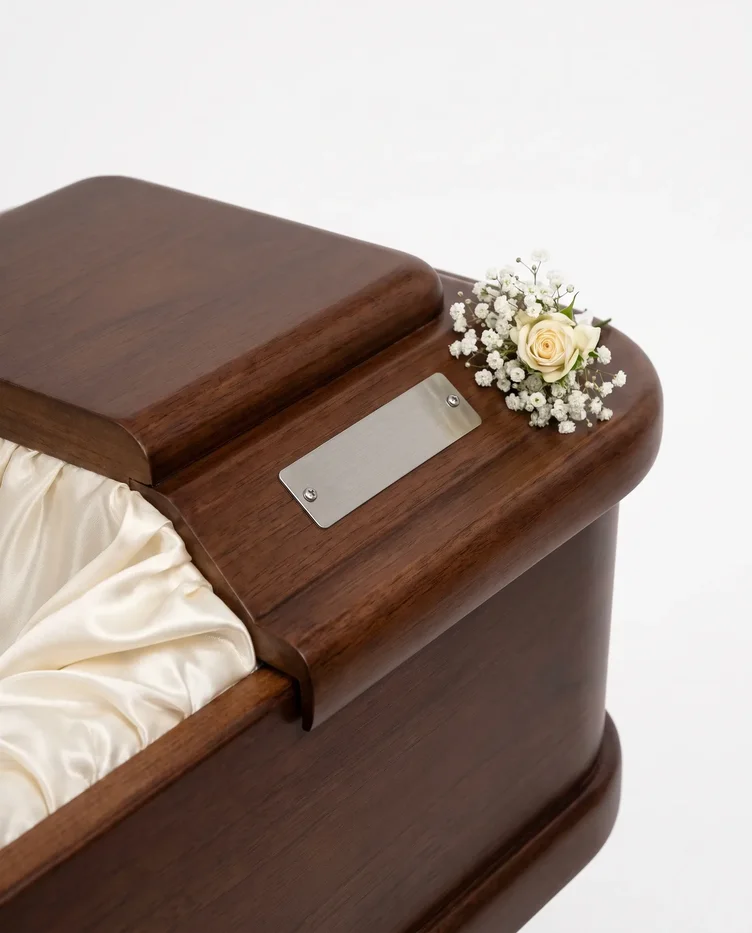
Should Appearance Be the Main Consideration?
Appearance is important, but it should not be the only factor.
Families are encouraged to consider:
- Quality
- Practicality
- Suitability
- Funeral arrangements
- Religious traditions
- Transportation requirements
The most expensive casket is not necessarily the most appropriate one.
Likewise, a simpler casket can still provide a deeply meaningful farewell.
Myth-busting
Common Misconceptions About Singapore Caskets
There are many myths surrounding funeral caskets.
Let's address some of the most common ones.
Myth 1 — More Expensive Means More Respect
False.
Respect is shown through the care, love and thought put into the funeral.
Families should never feel pressured to choose a casket beyond their comfort level.
Myth 2 — Everyone Chooses the Same Type of Casket
Not at all.
Every funeral is unique.
Different families choose different:
- Colours
- Materials
- Sizes
- Styles
- Interiors
There is tremendous variety among modern Singapore caskets.
Myth 3 — The Casket Is the Most Important Part of the Funeral
The casket is certainly important.
However, what people often remember most is:
- Family support
- Shared memories
- Meaningful prayers or speeches
- Music
- Compassion shown during the funeral
The casket is one part of a much larger farewell.
Myth 4 — You Must Decide Immediately
Families sometimes feel pressured to make every decision within minutes.
In reality, experienced funeral directors guide families through each step calmly and respectfully.
Taking time to understand the available options often results in better decisions.
Preparation
Questions Families Should Ask Their Funeral Provider
When discussing Singapore caskets, families may wish to ask:
- Which caskets are suitable for cremation?
- Which are suitable for burial?
- What materials are used?
- What sizes are available?
- What finishes are available?
- Can the interior be customised?
- Are there different handle designs?
- Are flowers included?
- Is transportation included?
- Can family members view the available caskets?
These questions help families understand their options without feeling overwhelmed.
The bigger picture
Choosing a Funeral Provider Is Equally Important
Selecting a beautiful casket is only one aspect of arranging a funeral.
Families should also choose a funeral provider who offers:
- Compassionate guidance
- Clear communication
- Professional coordination
- Respectful care of the deceased
- Attention to detail
- Experience with different religious traditions
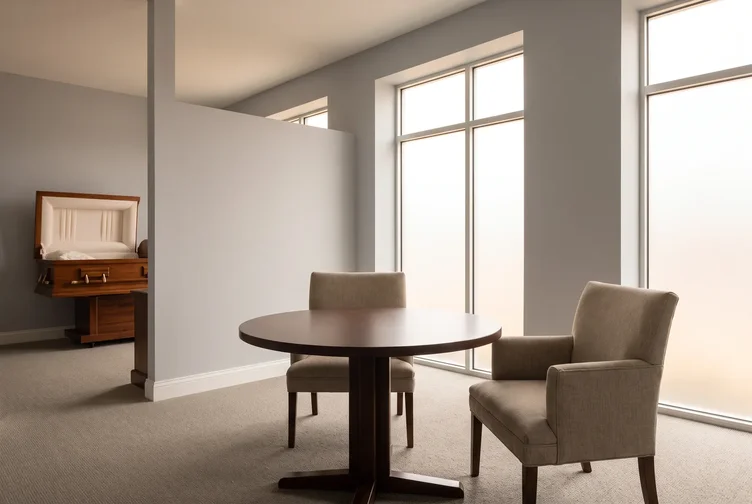
An experienced funeral team can explain the available casket options while coordinating transportation, preparation of the deceased, wake arrangements and the final farewell.
If you are exploring funeral arrangements, you may find these resources helpful:
Planning ahead can also reduce uncertainty for family members by recording important wishes before they are needed.
Recap
Summary
Choosing among the many available Singapore caskets is about far more than selecting a particular wood finish or style.
Families should consider:
- The wishes of the deceased
- Burial or cremation
- Religious customs
- Personal preferences
- Funeral arrangements
- Size requirements
- Interior fabrics
- Exterior finishes
- Opportunities for personalisation
A thoughtfully chosen casket becomes part of a respectful farewell that celebrates the life, values and legacy of someone deeply loved.
Part four
Costs, Frequently Asked Questions & Final Guide
In the previous sections, we explored the different types of Singapore caskets, the materials used in their construction, how to choose the right casket, and the factors families should consider during funeral planning.
This final section focuses on practical questions that many families have, including what influences the cost of a casket, how funeral packages typically include caskets, international repatriation, sustainability, and answers to the most frequently asked questions about Singapore caskets.
Budgeting
What Determines the Cost of Singapore Caskets?
One of the first questions families often ask is: “How much does a Singapore casket cost?”
There is no single answer because every casket is different.
Rather than looking at price alone, it is more useful to understand what influences the overall cost.
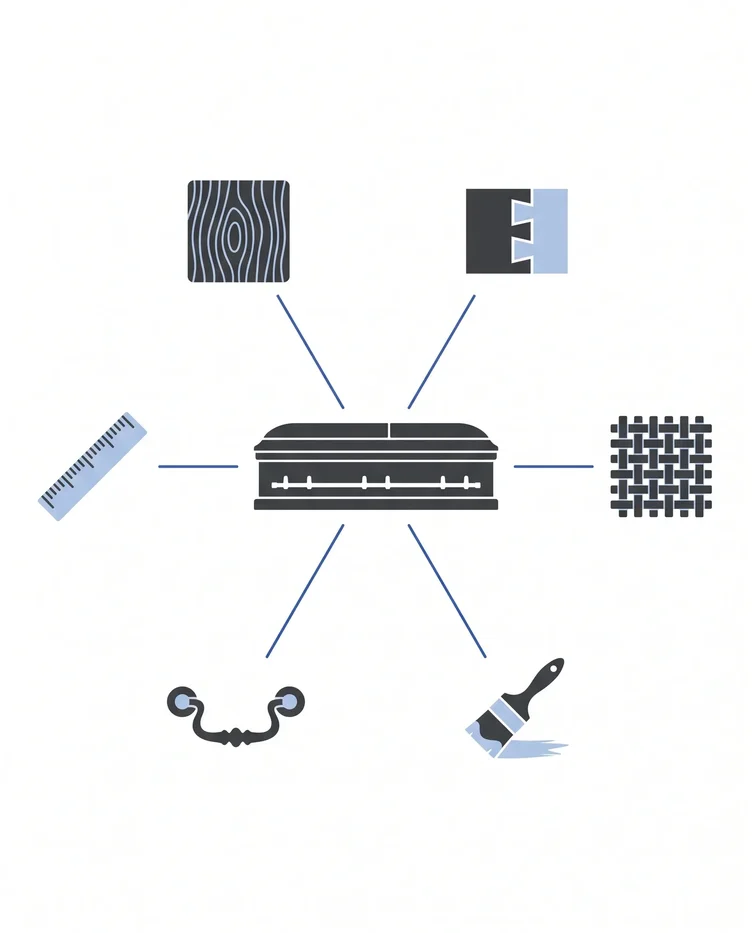
Material
The material used is one of the biggest factors.
Examples include:
- Solid hardwood
- Veneer wood
- Engineered wood
- Eco-friendly materials
Premium hardwood generally requires more craftsmanship and higher-quality timber than engineered alternatives.
Construction Quality
Two caskets may appear almost identical in photographs.
However, differences may include:
- Thickness of wood
- Joinery methods
- Hardware quality
- Interior construction
- Finish quality
Higher-quality craftsmanship often produces a smoother finish, stronger construction and a more refined appearance.
Interior Upholstery
Interior fabrics also influence the overall presentation.
Options may include:
- Satin
- Velvet
- Crepe
- Cotton
Additional cushioning, embroidered panels and premium pillow designs may also be available.
Exterior Finish
The finishing process contributes significantly to the appearance of a casket.
Examples include:
- Matte finish
- Satin finish
- High-gloss finish
- Piano gloss finish
- Natural wood finish
Multiple coats of polishing generally require additional workmanship.
Decorative Hardware
Decorative features may include:
- Premium handles
- Brass fittings
- Silver hardware
- Decorative corners
- Personalised name plates
Although largely aesthetic, these details contribute to the overall presentation.
Size
Larger caskets naturally require more materials and specialised manufacturing.
Examples include:
- Standard adult
- Extra-wide
- Bariatric
- Child-sized
- Infant
Availability
Occasionally, families may require a particular casket within a very short timeframe.
Availability depends on:
- Current inventory
- Supplier stock
- Delivery schedules
- Customisation requirements
Planning ahead where possible provides greater flexibility.
Coordination
Should Families Buy a Casket Separately?
Some people wonder whether they should purchase a casket independently.
In Singapore, many families choose a funeral provider that supplies the casket as part of the overall funeral arrangements.
This offers several advantages.
Simplified Coordination
Using a single funeral provider often makes coordination easier.
The provider can arrange:
- Transportation
- Preparation of the deceased
- Wake setup
- Delivery of the casket
- Funeral scheduling
- Cremation or burial arrangements
This reduces the need for families to coordinate multiple vendors during an already emotional period.
Compatibility
Funeral providers are familiar with:
- Crematorium requirements
- Transportation procedures
- Wake arrangements
- Religious customs
They can therefore recommend caskets that are suitable for the planned funeral.
Professional Guidance
Families purchasing a casket for the first time often appreciate professional advice.
Experienced funeral directors can explain:
- Material differences
- Size options
- Interior finishes
- Religious considerations
- Practical recommendations
This guidance helps families make informed decisions without unnecessary stress.
Making it personal
Can a Casket Be Personalised?
Yes.
Personalisation has become increasingly common in modern funeral services.
Rather than choosing a standard design, many families prefer to include meaningful details that celebrate the life of the deceased.
Examples include:
- Favourite flowers
- Family photographs
- Religious symbols
- Favourite colours
- Memorial cards
- Personal clothing
- Tribute displays
Some funeral providers may also offer engraved name plates or customised interior embroidery.
These small details often become lasting memories for family members.
Overseas arrangements
International Repatriation and Specialised Caskets
When a loved one passes away overseas—or when the deceased needs to be transported from Singapore to another country—the funeral arrangements may include international repatriation.
These cases often require additional planning and documentation.
The casket used for international transportation may need to comply with airline, destination-country and public health requirements.
Funeral providers experienced in repatriation can assist with:
- Documentation
- Embalming requirements
- Transportation arrangements
- Airline coordination
- Overseas funeral coordination
- Arrival procedures
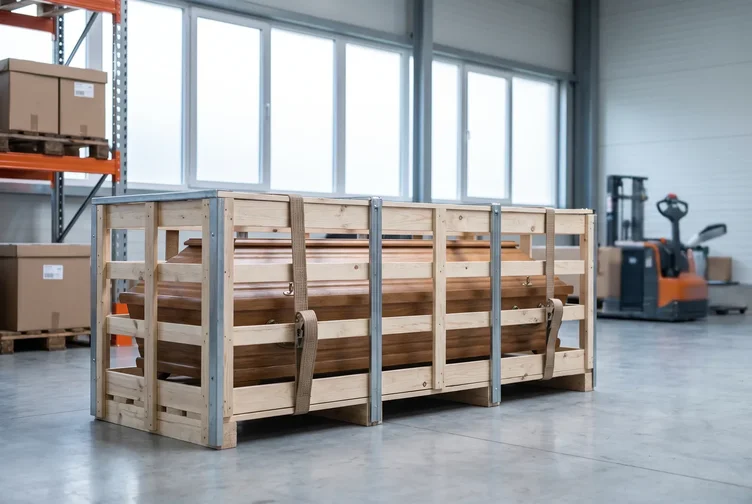
Families should seek professional guidance whenever international transportation is involved.
Sustainability
Eco-Friendly Funeral Choices
Environmental awareness has influenced many aspects of modern life, including funeral planning.
Some families wish to reduce the environmental impact of funeral arrangements.
Eco-conscious options may include:
- Sustainably sourced timber
- Simpler construction
- Reduced metal components
- Environmentally responsible finishes
Availability varies between funeral providers.
Families interested in environmentally conscious funeral options should discuss these preferences during the planning process.
What to avoid
Common Mistakes Families Should Avoid
Although every funeral is unique, experienced funeral directors often see similar concerns.
Being aware of these can make the decision-making process easier.
Choosing Too Quickly
Families sometimes feel pressured to decide immediately.
Taking a little time to understand the available options often leads to greater confidence.
Focusing Only on Appearance
A beautiful finish is important, but families should also consider:
- Suitability
- Practicality
- Religious customs
- Funeral arrangements
Comparing Only Price
A casket should never be judged solely by cost.
Construction quality, service coordination and professional support are equally important considerations.
Forgetting the Wishes of the Deceased
Where known, the wishes of the deceased should remain the most important consideration.
Common questions
Frequently Asked Questions About Singapore Caskets
What is the difference between a casket and a coffin?
A casket is generally rectangular with four straight sides, while a coffin has six sides that taper towards the head and feet. In Singapore, funeral providers commonly use the term casket.
Can any casket be used for cremation?
Not necessarily. Your funeral provider can advise which caskets are appropriate for cremation based on the materials used and applicable crematorium requirements.
Are wooden caskets still the most popular?
Yes. Wooden caskets remain among the most commonly selected Singapore caskets due to their traditional appearance and versatility.
Which wood is considered the most luxurious?
Many families regard mahogany and walnut as premium choices because of their rich colour and elegant grain.
Can I choose the colour of the casket?
Yes. Common finishes include white, walnut, mahogany, cherry, oak, natural wood and satin white.
Can families view the caskets before deciding?
Yes. Many funeral providers maintain a selection of caskets that families can view before making a decision.
Can a casket be customised?
In many cases, yes. Possible customisations include interior fabrics, floral arrangements, name plates, personal clothing and decorative elements. Availability varies by funeral provider.
What size casket do I need?
Most adults require a standard-sized casket. Larger and smaller sizes are available where necessary.
Are larger caskets available?
Yes. Specially designed bariatric caskets can be arranged when additional width or weight capacity is required.
Do different religions require different caskets?
Some religious traditions have customary preferences regarding style and symbolism. Families should discuss these considerations with their funeral provider.
Can a casket be opened during the wake?
Depending on the family's wishes, the condition of the deceased and the funeral arrangements, some services include an open-casket viewing while others do not.
How long does it take to arrange a casket?
Many funeral providers maintain a range of caskets that can be arranged promptly when funeral services are required.
Can flowers be placed on the casket?
Yes. Floral tributes are commonly placed on or around the casket during the wake and funeral service.
Can personal belongings be placed inside the casket?
Some personal items may be included, subject to practical considerations and, where applicable, crematorium or airline requirements. Families should discuss this with their funeral provider.
Is embalming required before using a casket?
Requirements vary depending on the circumstances, funeral arrangements and transportation needs. Your funeral provider can explain the available options.
Is funeral pre-planning helpful?
Many families find funeral pre-planning beneficial because it records important wishes in advance, reducing uncertainty for loved ones during an emotional time.
Where can I learn more about funeral services?
Families looking for a broader understanding of funeral arrangements may also find these resources helpful: Funeral Services, Christian Funeral Services, Catholic Funeral Services and Freethinker Funeral Services.
Final guidance
Selecting a Casket With Confidence
Selecting a casket is never simply about choosing a product. It is about honouring the memory of someone who has passed away with dignity, compassion and respect.
Modern Singapore caskets are available in a wide range of materials, finishes and styles, allowing families to choose an option that reflects the personality, beliefs and wishes of the deceased.
Whether you are arranging a Christian funeral, Catholic funeral, Freethinker funeral or another type of service, taking the time to understand the available casket options can make the decision-making process less overwhelming.
More importantly, families should remember that a meaningful funeral is shaped not only by the casket itself but also by the love shared, the memories celebrated and the support offered to one another during a difficult time.
Working with an experienced funeral provider can provide guidance at every stage—from selecting a suitable casket and coordinating transportation to arranging the wake, religious ceremonies and the final farewell.
By understanding the different types of Singapore caskets, the materials used in their construction and the practical considerations involved, families can make informed decisions that honour the life and legacy of someone deeply loved.
Explore our full range of funeral services or contact our funeral directors to begin planning.
Continue Your Planning
Funeral Services Overview
Return to the complete guide covering packages, timelines, religious traditions and pricing.
Visit service hub
How to Choose a Funeral Director
What to look for, questions to ask and how to compare providers with confidence.
Read article
Funeral Pre-planning
Record important wishes -- including casket preferences -- in advance for peace of mind.
Explore pre-planningCompassionate Funeral Support When Your Family Needs It
Speak with our funeral team for guidance on casket selection, funeral arrangements and wake planning.