


 Promisedland Casket
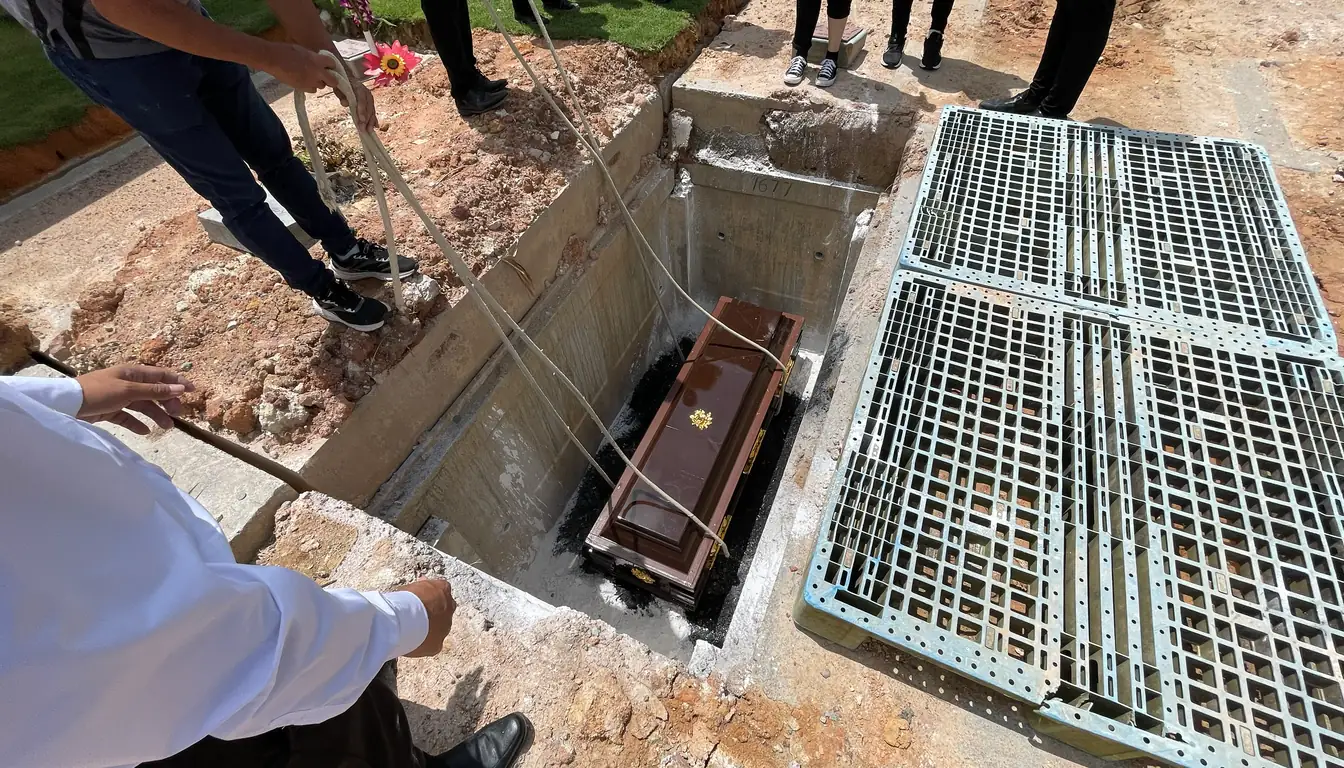
Not every casket suited for a cremation service is equally suited for burial, and the reverse is also true. Ground burial involves different practical considerations -- moisture, soil conditions, grave dimensions and the physical process of lowering the casket -- that don't apply the same way to a cremation.
This guide focuses specifically on what makes a casket appropriate for burial at Choa Chu Kang Cemetery, Singapore's only cemetery still open for new burials. For a broader look at casket materials, finishes and personalisation generally, see our full Singapore Caskets guide.
There is no single government specification dictating casket construction for burial in Singapore -- this guide reflects general funeral industry practice and what Promisedland Casket has learned helping families choose appropriately since 1989, rather than a fixed regulatory standard.
This guide covers:
- What distinguishes a burial casket from one chosen for cremation
- Materials and construction commonly used for ground burial
- Sizing considerations for Choa Chu Kang Cemetery plots
- Whether a casket needs to be sealed, and why
- How the choice connects to the cemetery's 15-year burial tenure
- Practical guidance for choosing with your funeral director
This guide is part of our Burial guide, covering the full process of arranging a burial in Singapore.
Getting started
What Is Burial Casket Requirements?
"Burial casket requirements" refers to the practical and construction considerations that make a casket suitable for ground burial, as distinct from one intended for cremation. These aren't government-mandated specifications in Singapore -- there is no published NEA or MyLegacy standard dictating casket materials or construction for burial -- but they are well-established considerations within the funeral industry, shaped by how a casket behaves once interred.
A casket destined for burial needs to withstand ground conditions over time, support its own weight and the weight of soil above it, and generally fit within standard grave dimensions at Choa Chu Kang Cemetery. A casket intended only for cremation doesn't need to meet any of these considerations, since it will never be placed underground.
Your funeral director will typically guide this choice as part of the overall casket selection process, factoring in the specific cemetery section, religious requirements, and your family's budget and preferences.
What to choose from
Main Types and Materials
Wooden Caskets
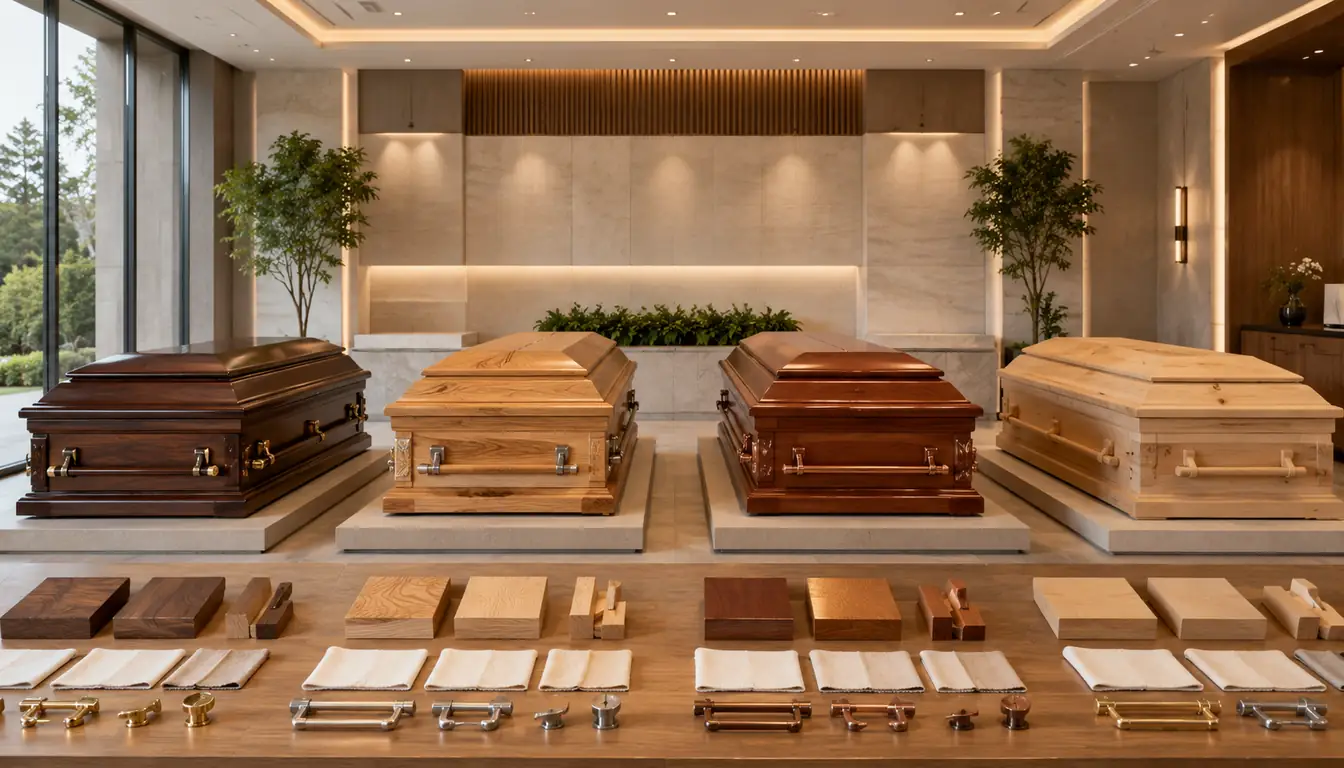
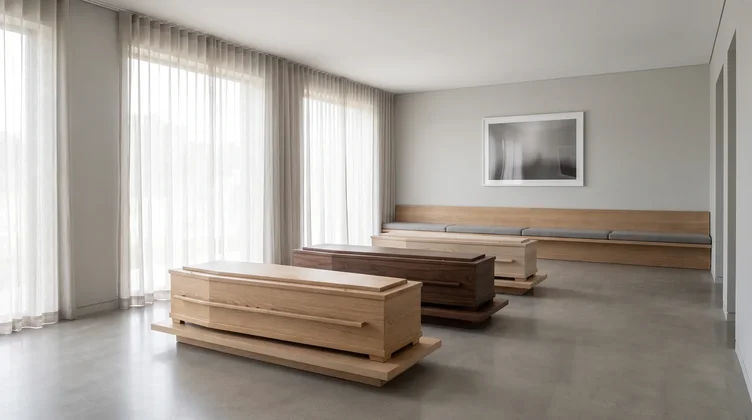
Solid wood caskets remain one of the most commonly chosen options for burial in Singapore, valued for their traditional appearance and general suitability for ground interment. Hardwoods such as mahogany and walnut are often positioned as premium choices, while more affordable timber options -- including veneer-finished constructions over a composite core -- are also widely available and remain entirely appropriate for burial.
Solid hardwood generally offers better long-term structural integrity underground than a composite or particleboard construction, though for a grave with a fixed 15-year tenure, this difference matters less than it would for a genuinely permanent burial.
Metal Caskets
Metal caskets, typically steel or copper-alloy construction, are chosen by some families for burial due to their durability and, in many cases, a sealed or gasketed closure that offers additional protection against moisture ingress compared to an unsealed wooden casket. Steel caskets are usually the more affordable metal option, while copper and bronze sit at the premium end.
Sealed vs Unsealed Construction
A sealed casket uses a gasket system to create a closer seal against the elements, while an unsealed casket relies on standard construction without this feature. Sealed caskets are generally positioned as a premium option and are not required by any government regulation in Singapore -- the choice comes down to family preference and budget rather than a compliance requirement.
It's worth understanding that a sealed casket slows, rather than prevents, the effects of ground conditions over time -- no casket construction is designed to remain unaffected indefinitely, which is part of why some families see the additional cost as more relevant to how the casket looks and functions during the wake than to what happens underground years later.
Considering the 15-Year Tenure
Because every grave at Choa Chu Kang Cemetery is exhumed after 15 years, some families factor this into their casket choice -- a heavier, more durable construction isn't necessarily advantageous if the grave will be reopened within a defined timeframe regardless. This is worth discussing with your funeral director if cost and material durability are both considerations for your family.
Sizing and finish
Features, Sizes and Finishes
Standard and Oversized Sizing
A standard adult casket is typically around 213 x 71 x 58 cm (84 x 28 x 23 inches) in exterior dimensions, and fits typical grave dimensions at Choa Chu Kang Cemetery without issue. For a larger individual, oversized or bariatric caskets can be arranged, though it's worth confirming plot dimensions with the cemetery in advance if this applies to your family.
Children's caskets are sized separately, and this also affects the burial fee -- as covered in our main Burial guide, children under 10 are charged a lower fee than adults across every cemetery section.
Interior and Handling Features
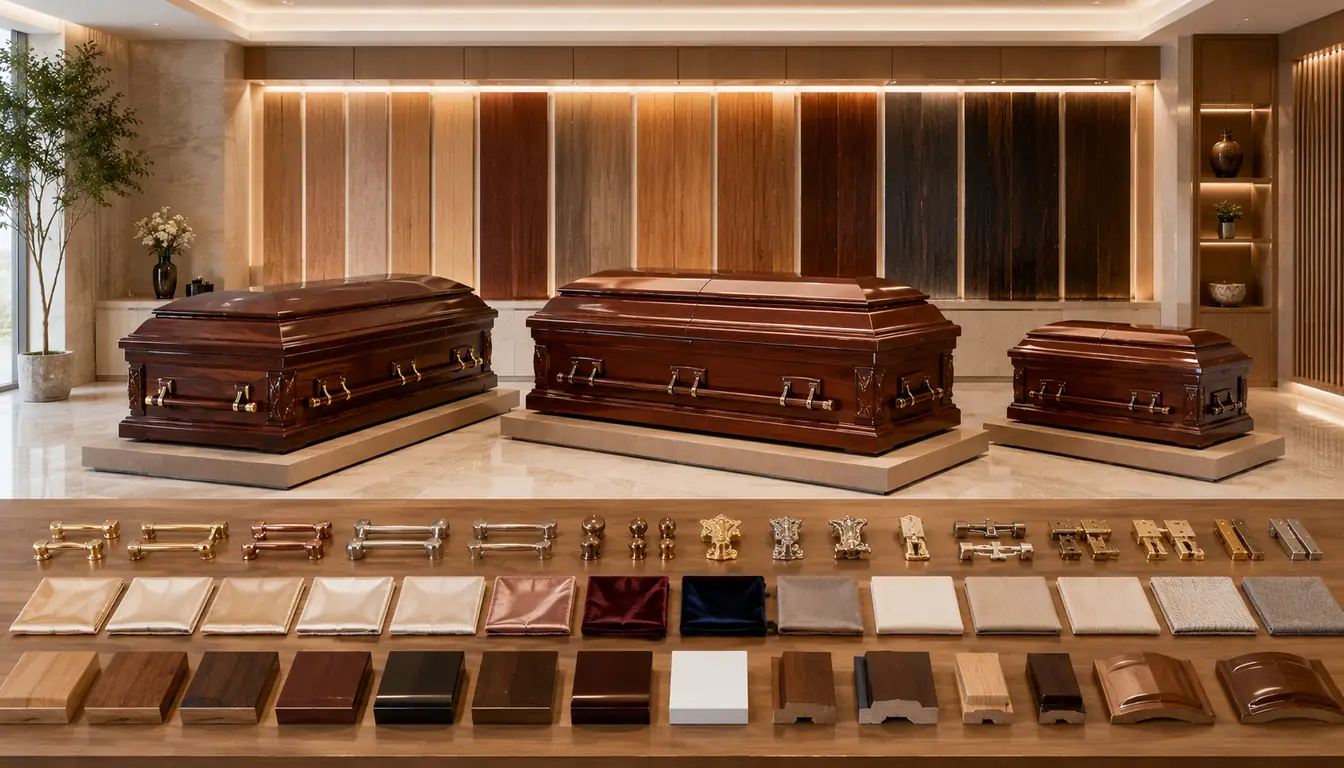
Interior fabrics, cushioning and handles are largely a matter of preference rather than burial-specific necessity, though sturdy handles matter more for a burial service given the physical process of carrying and lowering the casket at the graveside, compared to a cremation service where this step doesn't occur. Your funeral director's team typically manages the physical lowering, but a well-constructed handle system still matters for a dignified, controlled process.
Finish and Appearance
Common finishes -- white, walnut, mahogany, cherry, oak, natural wood and satin white -- are available regardless of whether the casket is intended for burial or cremation. The finish itself doesn't typically affect suitability for burial; it's the underlying construction and material that matters more. Some families choose a finish that reflects the deceased's personality or favourite colour, which is entirely compatible with any burial-appropriate construction.
Choosing the right fit
Suitability for Cremation, Burial or Repatriation
Not every casket is interchangeable across these three uses, and it's worth confirming suitability before finalising a choice:
- Burial -- benefits from sturdier construction able to bear the weight of soil and withstand ground conditions over time; sealed options offer additional protection some families value.
- Cremation -- must fit within the cremation chamber's permissible dimensions -- maximum length 210cm, maximum width 60cm, and maximum height 56cm including anything placed on top -- and generally rules out certain metal fittings or non-combustible materials. Your funeral director can confirm which caskets in a range are cremation-appropriate.
- International repatriation -- typically requires specialised caskets meeting airline and destination-country requirements, which differ from standard burial or cremation caskets and are covered in our International Repatriation guide.
This size limit matters more than families often expect -- a standard adult burial casket, at roughly 213 x 71 x 58cm, exceeds the maximum permissible cremation dimensions on every measurement. This is exactly why burial and cremation caskets are generally treated as separate product ranges rather than one casket being freely interchangeable between the two -- always confirm with your funeral director which specific casket in a range is intended for which use before finalising your choice.
If there's any chance the deceased's remains may later be repatriated, exhumed and cremated, or otherwise moved, it's worth raising this with your funeral director at the point of casket selection rather than assuming any casket will suit every future scenario.
Budgeting
Price and Value Considerations
Casket pricing is driven primarily by material and construction quality -- premium hardwoods and sealed metal caskets sit at the higher end, while simpler wooden constructions are generally more affordable. This is a separate cost from the burial fee itself, which ranges from $315 to $1,880 depending on cemetery section and citizenship status, as covered in our main Burial guide.
A sealed casket typically costs more than an equivalent unsealed one, given the additional gasket construction involved. Whether this additional cost is worthwhile is a personal decision -- some families value the extra protection, others see it as an unnecessary expense given the 15-year tenure that applies to every grave regardless of casket construction.
A reputable funeral director should be able to present casket options across a range of price points with the construction and material details clearly explained, rather than presenting cost as the only distinguishing factor between options.
Making the decision
How to Choose
A few questions help most families reach a decision they're comfortable with:
- Is the casket specifically suitable for ground burial, not just cremation?
- Does it fit within standard grave dimensions at Choa Chu Kang Cemetery, or does the family need to confirm oversized plot availability?
- Is a sealed construction important to the family, and does the added cost reflect that value?
- Does the chosen religious section have any specific customary preferences around casket style?
- Has the deceased's own wishes, where known, been factored into the material and finish?
Working through these questions with your funeral director, rather than choosing based on appearance alone, tends to lead to a choice families feel more settled about afterward.
Common questions
Frequently Asked Questions
Does Singapore require a specific casket material for burial?
No. There is no government regulation dictating casket materials or construction for burial in Singapore. The considerations in this guide reflect general funeral industry practice, not a legal requirement.
Does a burial casket need to be sealed?
No. A sealed casket, using a gasket system for additional protection against moisture, is a premium option families can choose, not a requirement for burial in Singapore.
Can any casket be used for both burial and cremation?
Not necessarily. Some caskets are constructed specifically for one or the other -- your funeral director can confirm whether a given casket is suitable for both, particularly if there's any chance the remains may later be cremated after exhumation.
What size casket fits a standard grave at Choa Chu Kang Cemetery?
Most standard adult caskets fit typical grave dimensions without issue. For a larger individual, oversized or bariatric caskets can be arranged -- it's worth confirming plot dimensions with the cemetery in advance if this applies to your family.
Does casket choice affect what happens during exhumation?
Since every grave at Choa Chu Kang Cemetery is exhumed after 15 years regardless of casket construction, some families choose a less durable, more affordable casket for this reason. This is a personal decision rather than a requirement.
Final guidance
A Decision Best Made With Guidance
Choosing a casket for burial involves different considerations than choosing one for cremation -- construction, sealing and sizing all matter in ways they simply don't for a service that ends in cremation rather than interment.
None of this is government-regulated in Singapore, which means the right choice comes down to what matters most to your family -- durability, budget, appearance, or some combination of all three.
Promisedland Casket has helped Christian, Catholic and Freethinker families across Singapore choose burial caskets appropriately since 1989, guided by what actually suits ground burial rather than a one-size-fits-all recommendation.
Continue Your Planning
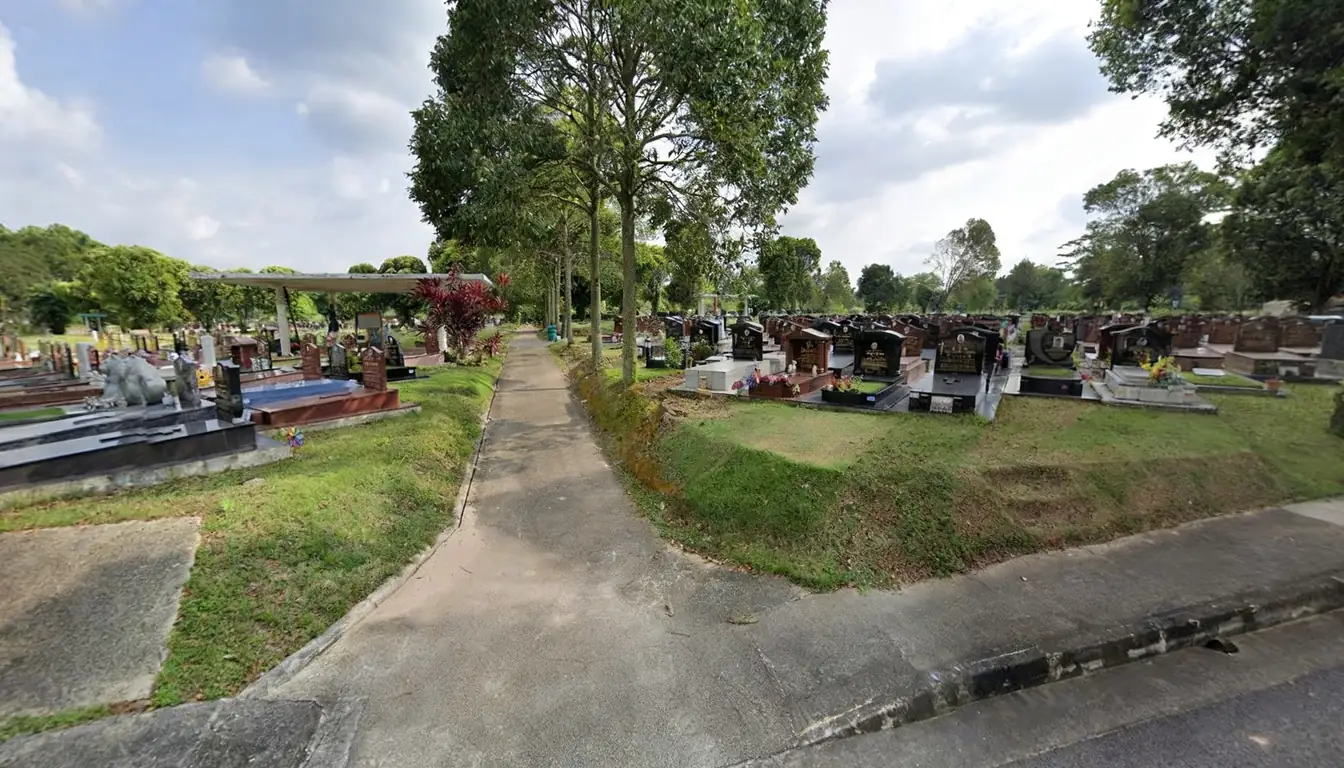
Singapore Caskets: Everything You Need to Know
Materials, finishes, pricing and personalisation in full detail.
Read the full guide
Funeral Services Overview
Speak with our team about packages, timelines and pricing.
Visit service hubCompassionate Funeral Support When Your Family Needs It
Speak with our funeral team for guidance on casket selection for burial.