


 Promisedland Casket
When someone dies, the days that follow are usually the hardest a family will face -- and, for most people, the least familiar. There is a death to report, a doctor to contact, a funeral director to choose, a venue to book, and a service to plan, often within a matter of days.
This guide brings together what a family in Singapore actually needs to do, in the order it usually needs to be done, grounded in the real government processes involved -- from certifying a death with the Immigration & Checkpoints Authority (ICA) to booking a wake venue with your Town Council or the Housing & Development Board (HDB). It draws on what Promisedland Casket has learned guiding Singaporean families through this exact process since 1989 -- which steps tend to trip people up, and which questions matter most when you have very little time to ask them.
You do not need to read this guide from start to finish. Use the table of contents to jump straight to what you need right now, whether that is reporting a death today or understanding funeral costs for a service you are planning next week.
This guide covers:
- What happens immediately after a death, and who to contact first
- The full Singapore funeral process, from death certification to the final service
- How much a funeral typically costs, and how families usually pay for it
- The documents you will need at each stage
- A complete, step-by-step checklist you can follow in order
- Where to go next for burial, cremation, caskets, documents and estate matters
Getting started
Funeral: Essential Overview
In Singapore, a funeral is not a single event but a short sequence of legal, practical and religious steps that begin the moment a doctor confirms a death and end when the deceased has been buried or cremated. Every stage is shaped by a mix of medical certification, government administration and family decision-making, and most of it needs to happen within days rather than weeks.
The process generally follows five stages: reporting the death and obtaining a death certificate, engaging a funeral director and arranging a venue, holding the wake and funeral service, carrying out the burial or cremation, and finally managing the ashes or grave and any estate matters that follow.

Who manages this process differs from family to family. Some families -- particularly those with strong religious or community networks -- coordinate much of it themselves, calling on a place of worship, clan association or trusted contacts. Most families in Singapore engage a licensed funeral director, who can be found through the Association of Funeral Directors (Singapore), to handle body collection, embalming (if needed), venue coordination and the logistics of burial or cremation. Promisedland Casket has supported this exact decision for Christian, Catholic and Freethinker families across Singapore since 1989.
Whichever path you choose, three decisions tend to shape everything else: where the wake will be held, whether the deceased will be buried or cremated, and how long the wake will last. The sections below walk through each of these decisions, the government processes behind them, and a complete step-by-step checklist you can follow from the first phone call to the final service.
Singapore's funeral process is unusually compressed compared to many other countries. Limited land, dense housing and tropical climate all push toward shorter timelines -- most wakes run for one to five days, and the National Environment Agency (NEA) requires prior written permission for anything longer than seven. That compression is not a reflection of how much a family is expected to grieve; it is simply a practical reality of how funerals are organised here, and funeral directors are used to helping families move through each step quickly without feeling rushed.
It also means that decisions many families elsewhere have weeks to consider -- which venue, which casket, whether to bury or cremate -- often need to be made within a day or two of the death. Having a general sense of the process before you need it, even briefly, tends to make those decisions considerably less stressful when the time comes.
What this guide connects to
Main Topics and Options
A funeral touches several distinct areas -- some medical and administrative, others practical and deeply personal. Each of the topics below has its own detailed guide; this page brings them together so you can see how they fit into the wider process.

Death Documents and Permits
Before anything else can happen, a doctor must certify the cause of death and submit it to ICA, after which you can download a digital death certificate. This document -- and the death document number that comes with it -- is what unlocks everything that follows, including burial and cremation permits.
The exact document you receive depends on how the death was certified: a completed digital death certificate carries a 6-digit number followed by a letter, while a temporary document issued before certification is finalised uses the format D10000. Both are accepted for making initial funeral arrangements. Read our full guide to Death Documents and Permits.
Death Administration
Beyond the death certificate itself, there are practical matters to work through in the first hours and days -- notifying next of kin, arranging for the body to be released from hospital or collected from home, and understanding what happens if a death is reported to the coroner.
This is also where the distinction between a natural, expected death and a case referred to a coroner matters most: the latter involves the police and Mortuary@HSA, and follows a noticeably different timeline from a standard hospital or home death. See Death Administration for the full picture.
Burial
Burial remains available in Singapore, though land is limited and most graves are subject to a fixed tenure before exhumation is required. Choa Chu Kang Cemetery is the primary site handling new burials today, and different plots and religious sections carry different requirements.
If your family is considering burial, our Burial guide covers cemetery choices, permits, tenure periods and what a burial service typically involves from booking through to the graveside service.
Cremation
Cremation is the most common choice for families in Singapore today, carried out at NEA-run crematoria such as Mandai. A cremation slot needs to be booked in advance using the death document, and the process itself typically takes place on the same day as the final farewell service.
Our Cremation guide explains how to book a slot, what happens during the process, and the options available afterward for the ashes.
Ash Management
Once cremation is complete, families generally choose between storing ashes in a columbarium, keeping them at home, scattering them at sea, or arranging inland ash scattering (IAS) at one of NEA's two dedicated facilities -- the Garden of Peace at Choa Chu Kang Cemetery, or the newer Garden of Serenity at Mandai North Crematorium. Each option has a different booking process and, in some cases, a different cost.
Ash Management walks through every option in detail, including how columbarium niches are allocated and what inland or sea scattering actually involves on the day.
Caskets and Coffins
The casket is usually the single largest physical decision in a funeral, and one of the most visible during the wake -- it is often what family and friends remember most clearly from the service itself. Materials, finishes and sizing all vary, and not every casket is suitable for both burial and cremation.
Our Caskets and Coffins guide explains materials, construction and how to choose one appropriate for your chosen disposition method and budget.
Environmental and Sustainable Funerals
A growing number of families are asking about more environmentally conscious options, from biodegradable urns to simpler, lower-impact services that reduce the material footprint of a traditional funeral without compromising on dignity or ceremony.
See Environmental and Sustainable Funerals for what is currently available in Singapore and how it compares to a conventional service.
Estate Administration
Once the funeral itself is arranged, many families still need to settle the deceased's estate -- checking whether a will exists, applying for a Grant of Probate or Letters of Administration, and working through a checklist of assets that typically includes CPF savings, property, vehicles, insurance policies, outstanding bills and subscriptions to close.
This stage often runs in parallel with, or shortly after, the funeral itself. Our Estate Administration guide covers this next stage in detail, including what changes if the deceased was Muslim, since Muslim inheritance follows a separate legal framework.
The full picture
How the Process Works in Singapore

The exact sequence depends on where the death occurred and whether the cause is known, but the overall shape of the process is consistent.
1. A Doctor Confirms the Cause of Death
If the death happened in a hospital, the attending doctor or ward nurse should be informed immediately, and the hospital will usually handle certification. If the death happened at home, a family doctor or GP can be called first; if none is available, families can use GPGoWhere to find a GP or home-care provider who offers death certification, or ask a funeral director to connect them with one. If the death happened overseas, the death must instead be registered with the local foreign authorities, with the Ministry of Foreign Affairs (MFA) or the nearest Singapore Overseas Mission able to assist with registration and repatriation.
When the cause of death is known and natural, the doctor certifies it online and submits it directly to ICA. When the cause is unknown or unnatural, the doctor must instead notify the police and report the death to a coroner, and the body is sent to Mortuary@HSA for further investigation -- a different, longer process known as a coroner's case.
2. You Receive a Death Document Number
Once certification is complete, you will be given a death document number -- either a 6-digit number followed by a letter (for example, 000001A) once the digital death certificate is ready for download, or a temporary number in the format D10000 while certification is finalised. This number, together with the deceased's ID number and date of death, is what you will use to apply for a burial or cremation permit and to make funeral arrangements.
3. You Engage a Funeral Director (or Arrange It Yourself)
Most families engage a licensed funeral director, which can be found through the Association of Funeral Directors (Singapore), to collect the body from the hospital, home or mortuary, arrange embalming where needed, coordinate the wake, and plan the burial, cremation or ash scattering. If the deceased passed away from a highly infectious disease, the funeral director must hold Basic Infection Control Course (BICC) certification from the National Centre for Infectious Diseases (NCID). The Competition and Consumer Commission of Singapore's A.S.K. checklist is a useful reference for the questions to ask any funeral director before engaging their services. This is the point at which Promisedland Casket typically joins a family's timeline -- taking over body collection, documentation and coordination so the family can focus on the people around them rather than the logistics.
4. You Decide on the Venue and Duration of the Wake
Wakes in Singapore are commonly held at an HDB void deck or multipurpose hall, on a public road or state land outside a landed property, or in a funeral parlour. Each venue has its own booking process, covered in detail in the section below. If the wake will run longer than 7 days after death, you must obtain prior written permission from the National Environment Agency (NEA) before proceeding. Navigating NEA, HDB and Town Council requirements correctly the first time is one of the areas where three decades of doing this for Singapore families matters most -- a permit filed incorrectly, or a duration miscalculated, can cost a family a venue booking at the worst possible moment.
5. The Wake and Funeral Service Take Place
The format of the service itself depends heavily on religion and family tradition -- Christian, Catholic, Buddhist, Taoist, Muslim, Hindu and Freethinker funerals each follow different customs around prayer, viewing and timing, which we cover in our religious and cultural funeral guides.
6. Burial or Cremation Is Carried Out
After the wake, the deceased is either buried or cremated, depending on the family's decision and, where applicable, the deceased's own wishes or religious requirements. Both processes require a booked slot and the relevant permit, obtained using the death document.
How Religion Shapes the Process
The steps above are the same for every family, but how they are carried out varies significantly by religion and tradition. Christian and Catholic funerals typically include a church service before burial or cremation, often with an open casket during the wake. Buddhist and Taoist funerals commonly involve chanting, joss paper offerings and rites that can extend across several days, with the specific customs varying by dialect group and temple. Muslim funerals follow Islamic requirements administered by MUIS and are usually completed as quickly as possible, often within 24 hours, with burial rather than cremation. Hindu funerals generally involve cremation, often on the same day or the day after death, along with specific rites performed by the family. Freethinker funerals follow no fixed religious structure, giving families the most flexibility over format, venue and duration.
None of these differences change the underlying government process -- certification, documents, venue booking and permits work the same way regardless of religion. What changes is the wake's format, its typical duration, and which type of disposition (burial or cremation) is customary. If your family follows a specific tradition, our religious and cultural funeral guides go into these customs in more depth.
7. Aftercare and Estate Matters Follow
Once the funeral itself is complete, most families still need to decide what to do with the ashes if cremation was chosen, and separately begin working through the deceased's estate -- checking for a will, applying for a Grant of Probate or Letters of Administration, and settling assets, CPF and outstanding accounts.
Practical decisions
Costs, Documents and Practical Decisions
Two questions come up in almost every conversation with a grieving family: what will this cost, and what paperwork do we actually need. Both have clearer answers than most families expect.

What Determines Funeral Cost
Funeral costs in Singapore vary based on several factors, and a reputable funeral director should be able to itemise all of them in a single quote:
- Funeral director fees
- Venue and duration of the wake
- Type of casket and ceremony charges
- Music, floral arrangements and food catering
- Burial or cremation fees
How Families Typically Pay
Funeral costs are usually covered in one of a few ways: from a pre-paid funeral plan or insurance policy arranged in advance, directly by family members or friends, or from the deceased's estate or un-nominated CPF savings if you are a beneficiary. If the deceased did not make a CPF nomination, a claim of up to $6,000 from their un-nominated CPF savings can generally be made through the Public Trustee Office (PTO). Using the wider estate to cover funeral costs requires first obtaining the legal right to deal with the deceased's assets -- covered in our Estate Administration guide.
How to Compare Funeral Director Quotes
Because funeral costs are made up of several separate line items, two quotes that look similar at a glance can differ significantly once venue charges, casket grade and additional services are accounted for. Ask each funeral director for a written, itemised quote rather than a single lump sum, and confirm upfront whether the price includes body collection, embalming, the wake venue and permit applications, or whether these are billed separately. The Competition and Consumer Commission of Singapore's A.S.K. checklist -- covering what to Ask, what your Sale agreement should include, and what to Know about your rights -- is a useful reference to bring into that first conversation, particularly if you are arranging a funeral for the first time.
The Documents You Will Need
At minimum, expect to need: the digital death certificate or death document number, your own NRIC, and -- if the deceased is being embalmed -- an embalming certificate from a licensed provider. These same documents are required again when booking a wake venue, so it is worth keeping them on hand throughout the process rather than tracking them down each time.
If the certifying doctor issued the death document outside of a hospital setting, you may receive the document number, the deceased's ID number and the date of death informally -- for example, by WhatsApp -- rather than as a printed form. Keep a screenshot or note of this information immediately, since it is what every subsequent booking and permit application will ask for.
Choosing Where to Hold the Wake
Where you hold the wake affects both the booking process and the cost:
- HDB void deck or multipurpose hall -- can be booked online via LifeSG if you are over 21 and a relative of the deceased, or through your Town Council, which can advise on the nearest available common space and any utility charges.
- HDB or URA car parks -- surface lots can be applied for through the HDB Branch Service Line, the HDB e-feedback form, or directly with URA if the car park falls under its management; HDB also offers temporary parking for bereaved family members near the venue.
- Public roads or state land -- outside a landed property, this requires a Temporary Occupation Licence (TOL) from the Singapore Land Authority, plus a road-closure permit from the Singapore Police Force if the road itself needs to be closed.
- Funeral parlour -- your funeral director can advise on available parlours and the applicable venue rental fee.
Whichever venue you choose, bring the digital death certificate, your NRIC and a means of payment (cash, NETS or credit card) when booking or collecting a permit in person.
What Families Often Overlook
Parking is one of the most commonly underestimated practical details. A void deck wake with even a modest turnout can quickly overwhelm nearby parking, which is why HDB offers temporary parking specifically for bereaved family members -- it is worth applying for this at the same time as the venue itself, rather than waiting to see if it becomes a problem. Utility charges for a void deck or multipurpose hall (water and electricity) are also billed separately from the booking fee itself, and your Town Council can confirm the amount when you collect your permit.
A checklist you can follow now
Step-by-Step Guidance
If you are in the middle of arranging a funeral right now, this is the order most families follow:
- Confirm the cause of death. Contact the hospital doctor or ward nurse if the death occurred in hospital, or a family doctor / GPGoWhere provider if it occurred at home.
- Wait for certification. A natural, known cause is certified online directly to ICA; an unknown or unnatural cause is referred to the police and Mortuary@HSA instead.
- Download the digital death certificate once certification is complete, and note the death document number.
- Decide whether to engage a funeral director. Most families do, using the Association of Funeral Directors (Singapore) to find one.
- Choose the wake venue -- HDB void deck, car park, public road, state land or funeral parlour -- and confirm the wake's duration (over 7 days needs NEA's prior written permission).
- Book the venue, bringing your NRIC, the death certificate and a means of payment.
- Decide on burial or cremation and book the corresponding slot using the death document.
- Hold the wake and funeral service according to the family's or deceased's religious and cultural wishes.
- Carry out the burial or cremation.
- Arrange ash storage or scattering, if cremation was chosen.
- Begin estate administration -- check for a will, apply for a Grant of Probate or Letters of Administration, and settle CPF, property and outstanding accounts.
You do not need to complete every step alone. A licensed funeral director can take on most of the logistics from step four onward, which is why many families choose to engage one early rather than midway through the process.
Where This Checklist Most Often Goes Wrong
Three points in this sequence cause the most delay for families we speak with. The first is step two: waiting on certification without knowing whether a case has been referred to the coroner, which can add days to the timeline if the cause of death is unclear. The second is step five: assuming a preferred venue -- particularly a popular void deck -- will be available on short notice, when in practice availability should be confirmed before finalising a wake date with guests. The third is step eleven: leaving estate administration until well after the funeral, which is understandable emotionally but can make claims like the CPF un-nominated savings withdrawal take longer to resolve than necessary.
None of these are things you need to solve alone or immediately. Knowing they exist in advance is usually enough to avoid being caught off guard by them.
Common questions
Frequently Asked Questions
How soon after a death must the funeral be held in Singapore?
There is no fixed legal deadline, but if the wake will run longer than 7 days after death, you must obtain prior written permission from the National Environment Agency (NEA) before proceeding.
Do I need to engage a funeral director?
It is not legally required, but most families do. A licensed funeral director found through the Association of Funeral Directors (Singapore) can handle body collection, embalming, venue coordination and the burial or cremation process.
What is a digital death certificate and how do I get one?
Once a doctor certifies the cause of death as natural and known, the certification is submitted online to the Immigration & Checkpoints Authority (ICA), after which the digital death certificate becomes available for download.
Can my family book an HDB void deck for the wake ourselves?
Yes. You can book a void deck or multipurpose hall online via LifeSG if you are over 21 and a relative of the deceased, or arrange it through your Town Council.
Who pays for the funeral if there is no pre-paid plan?
Funeral costs are usually paid by family members, from the deceased's estate, or through a claim of up to $6,000 from un-nominated CPF savings via the Public Trustee Office (PTO), if you are a beneficiary.
What happens if the cause of death is unknown or unnatural?
The doctor will notify the police and report the death to a coroner, and the body will be sent to Mortuary@HSA for further investigation. This follows a different, typically longer timeline than a standard hospital or home death, and the usual funeral arrangements cannot proceed until the coroner's process is complete.
Final guidance
Moving Forward With Confidence
Arranging a funeral in Singapore involves more government processes than most families expect -- death certification through ICA, venue permits through HDB, your Town Council or the Singapore Land Authority, and NEA's rules around wake duration. None of it is complicated on its own, but going through all of it while grieving is genuinely difficult.
That is exactly why most families choose to work with a funeral director rather than coordinate every step alone. A good funeral director does not just supply a casket and a venue; they carry the administrative weight of the process -- and the regulatory detail behind it -- so your family can focus on saying goodbye.
Promisedland Casket has been that funeral director for Christian, Catholic and Freethinker families across Singapore since 1989. Every process described in this guide -- from ICA certification to NEA's wake-duration rules -- is one our team navigates on a family's behalf as a matter of course, not something you are expected to work out alone.
Continue Your Planning
Death Documents and Permits
What you need to report a death and obtain a death certificate in Singapore.
Read the guide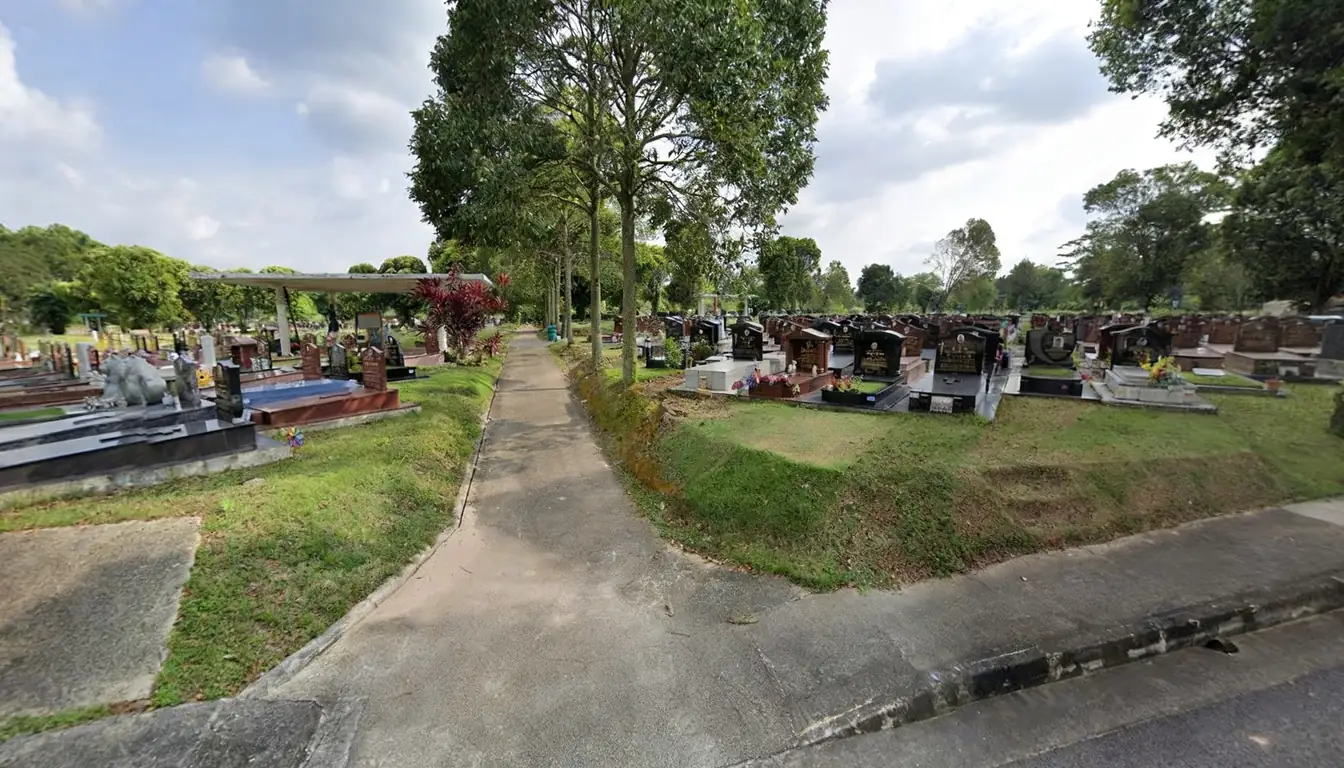
Burial vs Cremation
Understand the process, cost and considerations for each option.
Compare your options
Funeral Services Overview
Speak with our team about packages, timelines and pricing.
Visit service hubCompassionate Funeral Support When Your Family Needs It
Speak with our funeral team for guidance on funeral arrangements.