


 Promisedland Casket
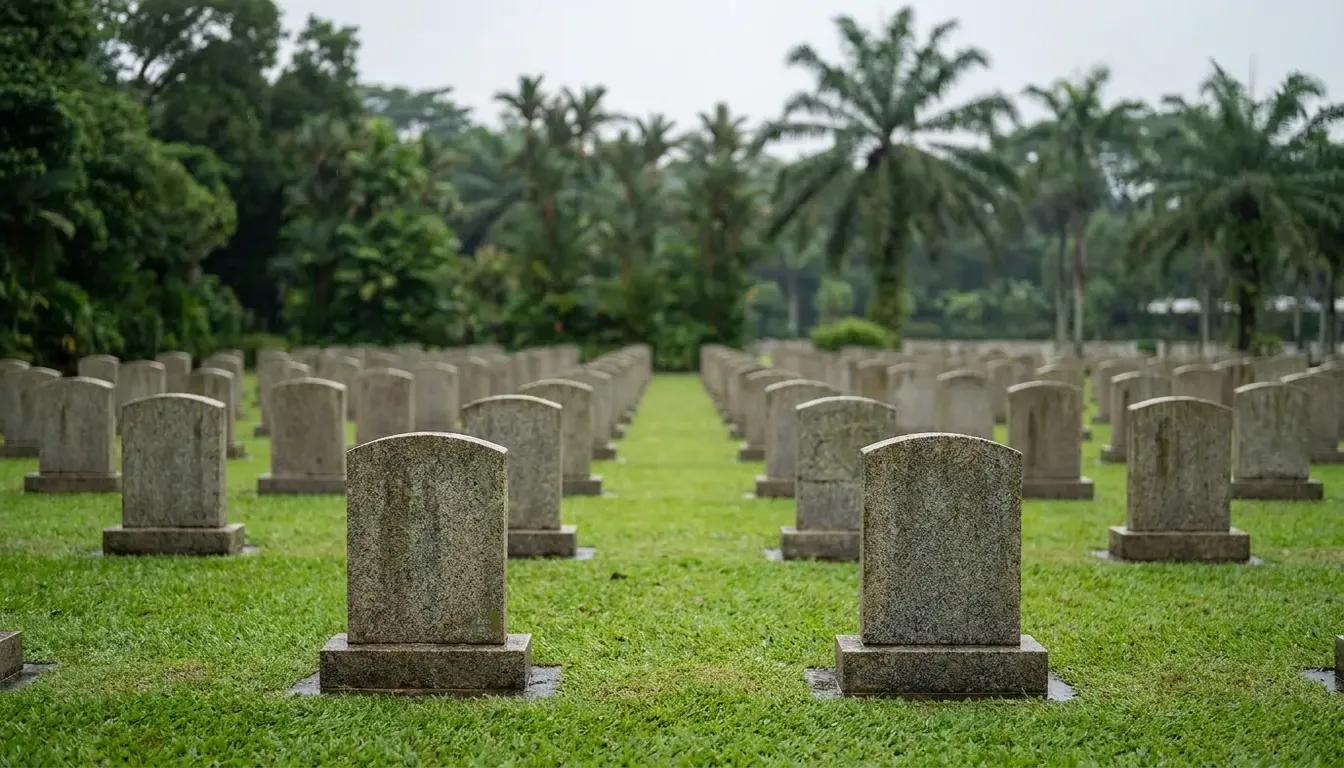
Every grave at Choa Chu Kang Cemetery -- the only cemetery in Singapore still open for burials -- is subject to a 15-year burial period, a rule that has applied since 1998. When that period ends, NEA exhumes the grave as part of a structured, phased programme, and next-of-kin are given the opportunity to register a claim before it happens.
This isn't something a family chooses or schedules themselves -- it happens on NEA's own timeline, phase by phase, as blocks of graves reach the 15-year mark. What a family can control is registering their claim in time, and deciding what happens to the remains afterward.
This guide explains exactly how the exhumation programme works, based on NEA's own published notices and procedures, and what Promisedland Casket has learned helping families through it since 1989.
This guide covers:
- Why exhumation happens, and how NEA's phased programme works
- How next-of-kin are notified and how to register a claim
- What happens to the remains after exhumation
- What it costs -- and why it's different from a voluntary cremation
- The option to arrange a private exhumation instead
- What happens if a grave is left unclaimed
This guide is part of our Ash Management guide, covering every option for cremated and buried remains in Singapore.
Getting started
Exhumation: Essential Overview
In 1998, the Singapore government announced that all graves at Choa Chu Kang Cemetery would be limited to a 15-year burial period, to keep cemetery land available for future use. Since 2004, NEA has progressively exhumed graves that reach this limit, working through the cemetery in numbered phases -- Phase 9 and Phase 10 are the most recently active as of this writing, with more than eight phases completed since the programme began.
Each phase covers specific blocks within the cemetery, and NEA publishes a formal Notice of Exhumation naming exactly which blocks are affected, along with a deadline for next-of-kin to register a claim for the remains.
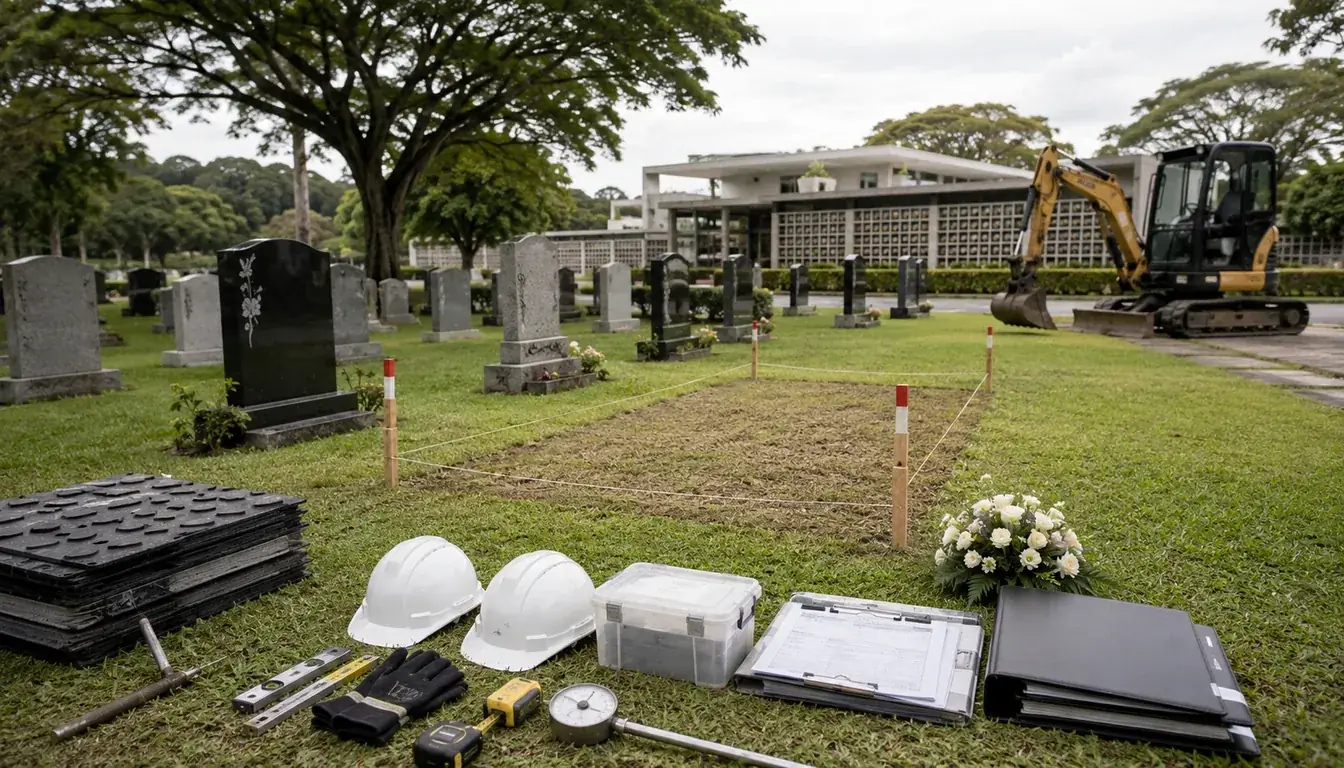
This is one of the few parts of the funeral and ash management process that isn't initiated by the family -- it happens on NEA's schedule, and a family's role is to watch for the notice affecting their loved one's grave, register a claim, and decide what happens to the remains once exhumed.
The good news for most families is that NEA bears the cost of the core process -- exhumation, cremation, and a standard columbarium niche are provided at no charge to the claimant, which is notably different from the cost of a voluntary cremation and niche booking.
What's involved
Main Topics and Options
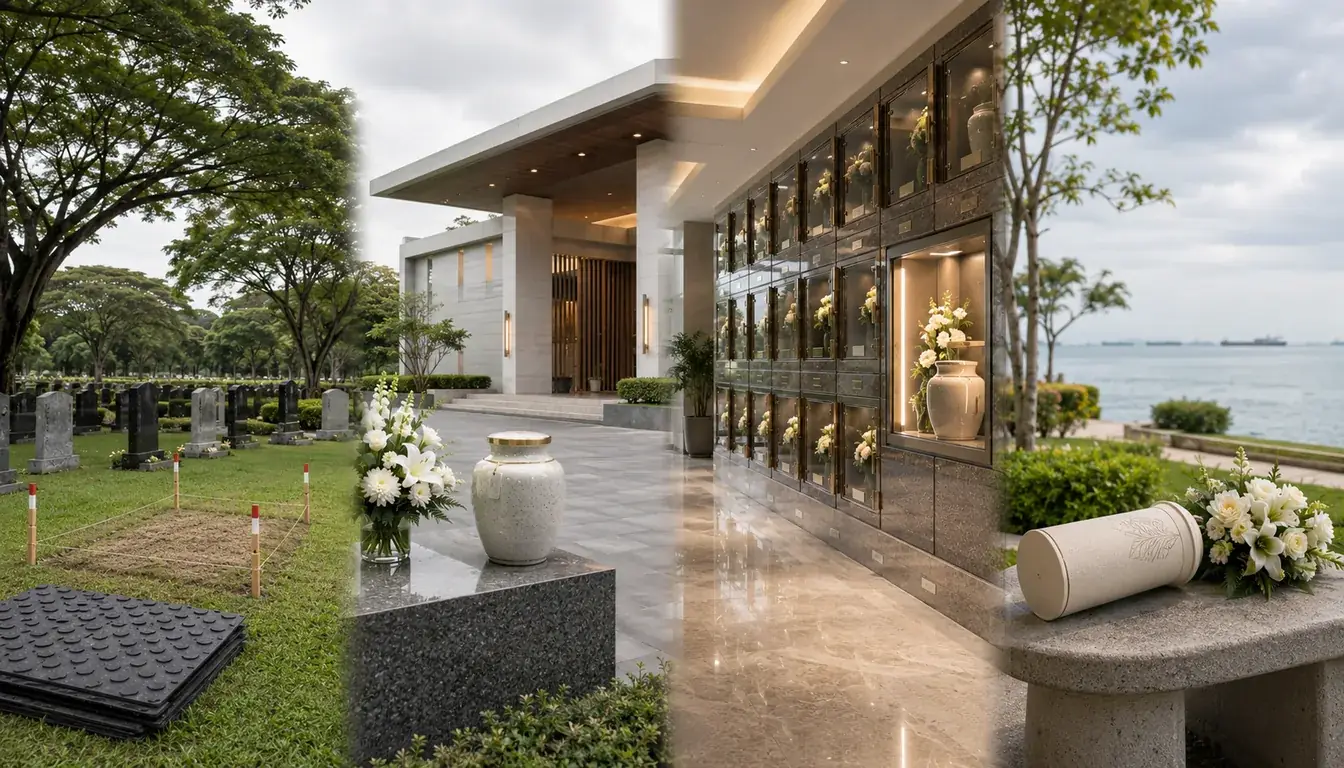
Registering a Claim
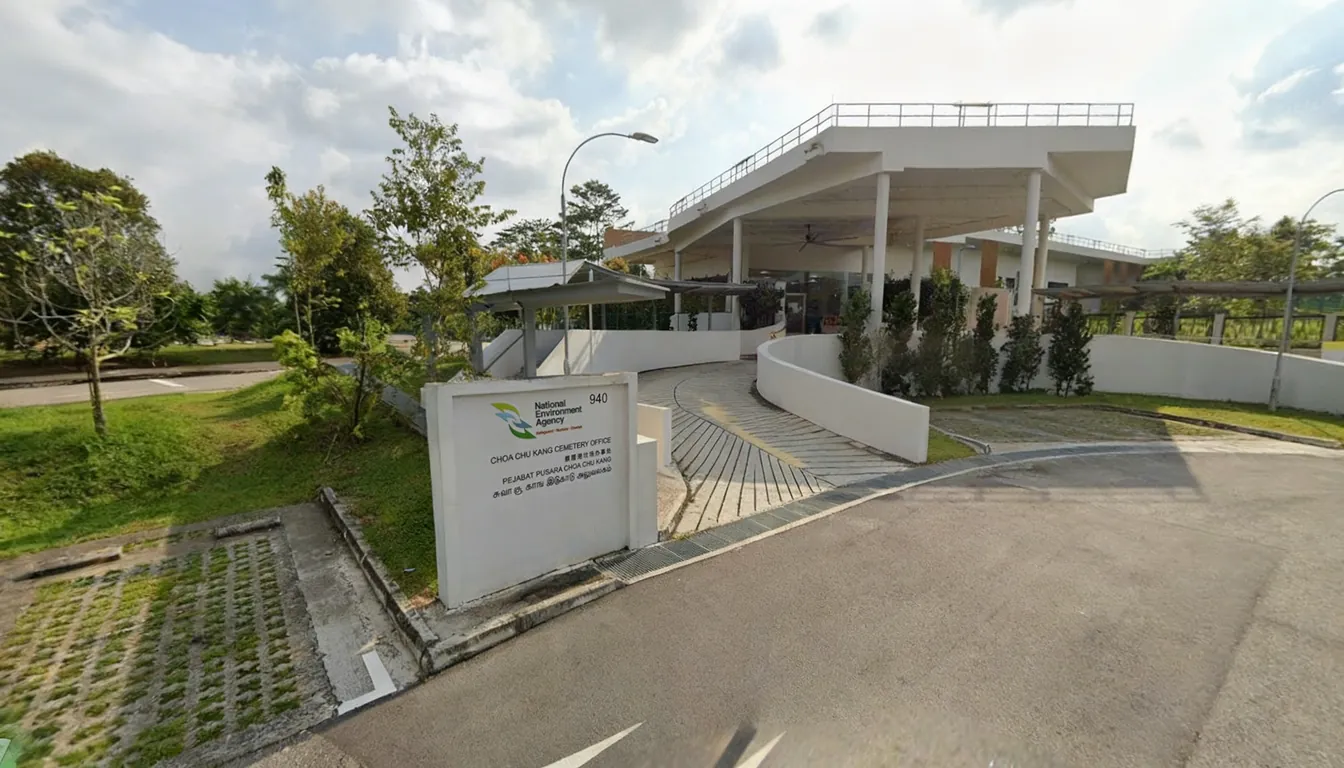
When a phase affecting your loved one's grave is announced, next-of-kin can register a claim online via a QR code or gov.sg link, or in person at the Choa Chu Kang Cemetery Office (940 Old Choa Chu Kang Road, tel 6795 5511, email nea_cckexhumation@nea.gov.sg, Monday to Friday 8.30am-4.30pm). Each phase has its own registration deadline, so it's worth registering as early as possible once a notice is published rather than waiting.
NEA also produces a Mass Exhumation Registration Video Guide alongside each phase's written notice, walking through the online registration steps -- a useful resource for next-of-kin who aren't confident navigating the government e-service on their own.
What Happens After Exhumation
All graves in an affected phase are exhumed individually by a contractor engaged and supervised by NEA. The exhumed remains are cremated on the same day at Choa Chu Kang Crematorium. Claimants and relatives who wish to witness the exhumation may do so on the scheduled date.
Choosing What Happens to the Cremated Remains
Once cremation is complete, the claimant chooses between a standard niche in a government columbarium (NEA allocates the niche, with an optional $250 fee to choose a specific location instead) or having the ashes scattered inland or at sea by NEA's appointed contractor -- the same choice a family would make after any cremation, just arranged as part of this process rather than separately.
Families who want a photograph added to the niche plaque can do so by providing a digital copy when NEA notifies them at this stage -- worth having one ready in advance if this matters to your family, since the notification window can be relatively short.
Making Private Arrangements Instead
Families who prefer to handle the exhumation themselves can engage their own contractor at their own expense. That contractor still needs to apply for an exhumation permit from NEA by the same registration deadline, and complete the physical exhumation within the same overall timeframe as the government-run programme. This route is chosen far less often than the standard NEA process, but remains available for families with a specific reason to want more control.
If a Grave Is Left Unclaimed
Exhumation proceeds on NEA's schedule regardless of whether a claim has been registered. Unclaimed remains are still exhumed and cremated, and the ashes are kept for three years before being scattered at sea by default -- which is why registering a claim in time matters, if a family wants any say in what happens next. This default outcome applies equally whether a family was simply unaware of the notice or chose not to respond.
The full picture
How the Process Works in Singapore
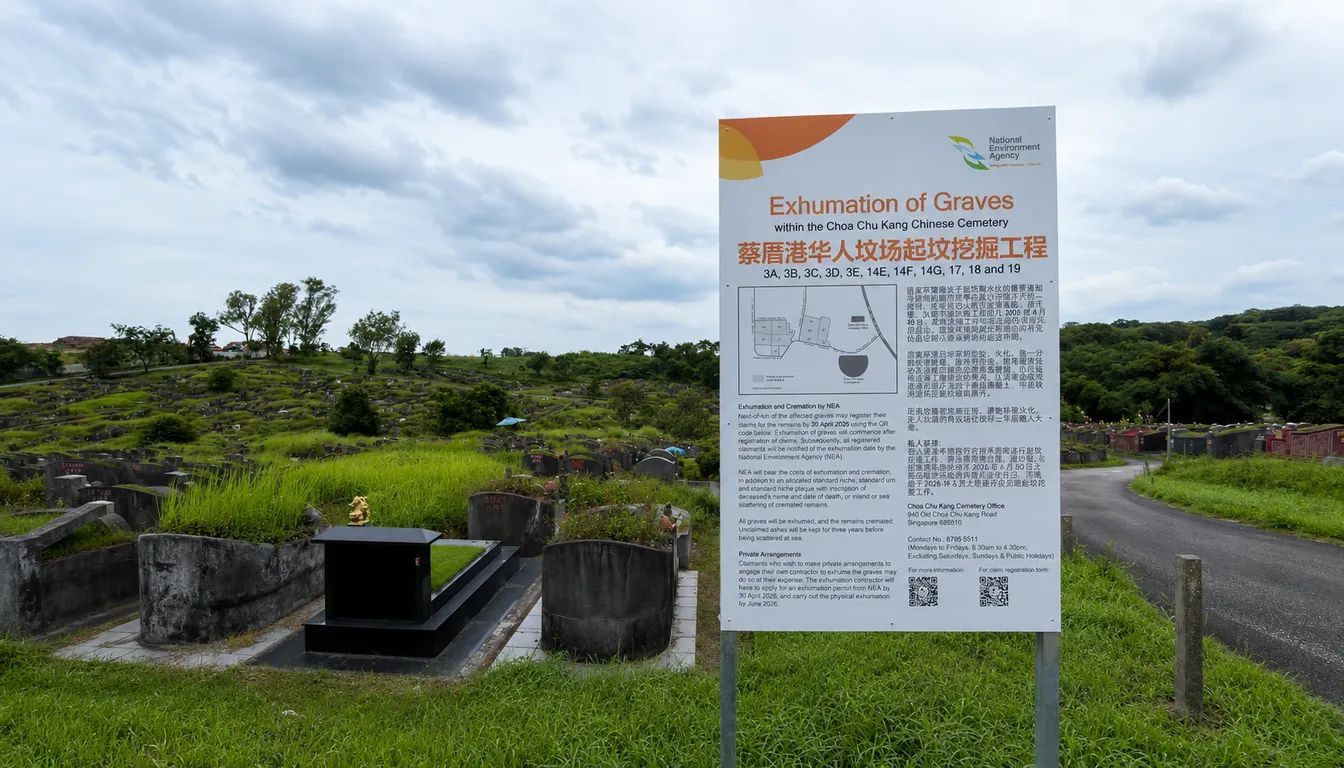
1. NEA Publishes a Notice of Exhumation
As blocks of graves reach the 15-year mark, NEA announces the next exhumation phase, naming the specific blocks affected and setting a registration deadline for next-of-kin. Since the programme began in 2004, it has worked progressively through the Chinese, Muslim and Hindu sections of the cemetery, with more than eight phases completed to date.
2. Next-of-Kin Register a Claim
Registration is done online via QR code or gov.sg link, or in person at the Choa Chu Kang Cemetery Office, before the phase's deadline. First-time users of the online system are directed through a verification page before reaching the actual gov.sg registration link, which is a standard government security step rather than anything specific to the exhumation service.
3. NEA Schedules and Notifies the Exhumation Date
Once a claim is registered, NEA schedules the actual exhumation and notifies the claimant of the date, with physical exhumation generally beginning a couple of months after the registration deadline closes. This gap gives NEA time to process every registered claim from that phase and plan the exhumation schedule.
4. The Grave Is Exhumed
An NEA-engaged contractor exhumes the grave individually on the scheduled date. Claimants and relatives may attend to witness this if they wish -- something worth deciding as a family in advance, since not every relative will necessarily want to be present.
5. The Remains Are Cremated
Cremation takes place the same day at Choa Chu Kang Crematorium -- there's no separate booking step required, since this is handled as part of the exhumation process itself, unlike a standalone cremation which needs its own booking.
6. The Claimant Chooses the Final Resting Place
The claimant decides between a government columbarium niche or scattering (inland or at sea, arranged by NEA's contractor). If a photo is wanted on the niche plaque, the family provides a digital copy when NEA notifies them of this step. This decision mirrors the same choice families make after any voluntary cremation, just folded into the exhumation programme's own timeline.
Practical decisions
Costs, Documents and Practical Decisions
What NEA Covers at No Cost
For claimed remains going through NEA's standard process, the following are provided free of charge:
- The exhumation itself
- Cremation at Choa Chu Kang Crematorium
- A standard niche in a government columbarium
- A standard urn
- A standard niche plaque, inscribed with the deceased's name and date of death
- Inland or sea scattering, if chosen instead of a niche
The only cost a claimant may face is the $250 fee to choose a specific niche location rather than the one NEA allocates -- everything else in the standard process is covered.
The Cost of Making Private Arrangements
Families who engage their own contractor for a private exhumation bear that cost entirely themselves, on top of still needing to secure an NEA exhumation permit by the registration deadline. This route is chosen far less often, generally only where a family has a specific reason to want more control over the process or timing than the government programme allows.
Documents and Registration
Registering a claim requires confirming your relationship as next-of-kin, generally through the online registration system linked in NEA's Notice of Exhumation for the relevant phase, or in person at the Choa Chu Kang Cemetery Office. It's worth registering as soon as a notice is published rather than close to the deadline, since NEA needs time to schedule and notify claimants of the actual exhumation date afterward.
A checklist you can follow now
Step-by-Step Guidance
If you've learned that a loved one's grave is affected by an upcoming exhumation phase, this is the order to work through it:
- Confirm the affected blocks match your loved one's grave location by checking NEA's published Notice of Exhumation for the current phase.
- Register your claim early -- online via the QR code/gov.sg link, or in person at the Choa Chu Kang Cemetery Office -- well before the phase deadline.
- Decide between the standard NEA process and a private arrangement, if you have a specific reason to want more control over timing.
- Wait for NEA to notify you of the scheduled exhumation date once your claim is registered.
- Decide whether to witness the exhumation, and let NEA know if you and other relatives plan to attend.
- Decide on the final resting place -- a government columbarium niche, or inland/sea scattering -- ahead of the cremation itself, if possible.
- Provide a digital photo if you'd like one added to the niche plaque, when NEA requests it.
Where This Most Often Causes Difficulty
The most common issue is simply missing the notice -- families who have moved, or who aren't actively monitoring NEA's announcements, can miss the registration deadline for a phase affecting their loved one's grave. Because exhumation proceeds regardless of whether a claim is registered, missing the deadline means losing the ability to choose what happens to the remains, not delaying the process itself.
A second, quieter difficulty is family disagreement over whether to witness the exhumation itself -- some relatives find it meaningful to be present, others find the idea distressing. There's no right answer here; deciding as a family in advance, rather than in the moment, tends to make it easier for everyone.
Common questions
Frequently Asked Questions
How will I know if my loved one's grave is being exhumed?
NEA publishes a Notice of Exhumation for each phase, naming the specific cemetery blocks affected. Next-of-kin need to check these notices or register proactively, since NEA's programme proceeds on its own schedule regardless of whether a family has been reached individually.
Does exhumation cost anything?
For claimed remains going through NEA's standard process, exhumation, cremation, a standard niche, a standard urn and a standard inscribed niche plaque are all provided at no cost. The only optional fee is $250 to choose a specific niche location instead of the one NEA allocates.
What happens if no one registers a claim?
The grave is still exhumed and the remains cremated on NEA's schedule. Unclaimed ashes are kept for three years and then scattered at sea by default.
Can I choose whether the remains are placed in a niche or scattered?
Yes. After cremation, the claimant chooses between a standard government columbarium niche or inland or sea scattering, arranged by NEA's appointed contractor.
Can I use my own contractor instead of NEA's exhumation programme?
Yes. Families can engage a private contractor at their own expense, though that contractor must still apply for an NEA exhumation permit by the same registration deadline as the standard programme.
Final guidance
Registering Early Matters Most
Exhumation is one of the few parts of this process a family doesn't initiate -- it happens on NEA's own schedule as graves reach their 15-year limit. The one thing genuinely within a family's control is registering a claim as soon as a notice is published, so there's still a say in what happens to the remains afterward.
Beyond that, the process itself is more straightforward -- and less costly -- than many families expect, with NEA covering exhumation, cremation and a standard niche as part of the standard programme.
Promisedland Casket has helped Christian, Catholic and Freethinker families across Singapore through exactly this process since 1989, and our Aftercare Specialist, Jennifer Soh, continues supporting families through it today.
Continue Your Planning

Ash Management
The full picture -- columbarium, scattering and every other option.
Read the guide
Columbarium
Full detail on NEA niche booking, fees and how to choose a location.
Read the guide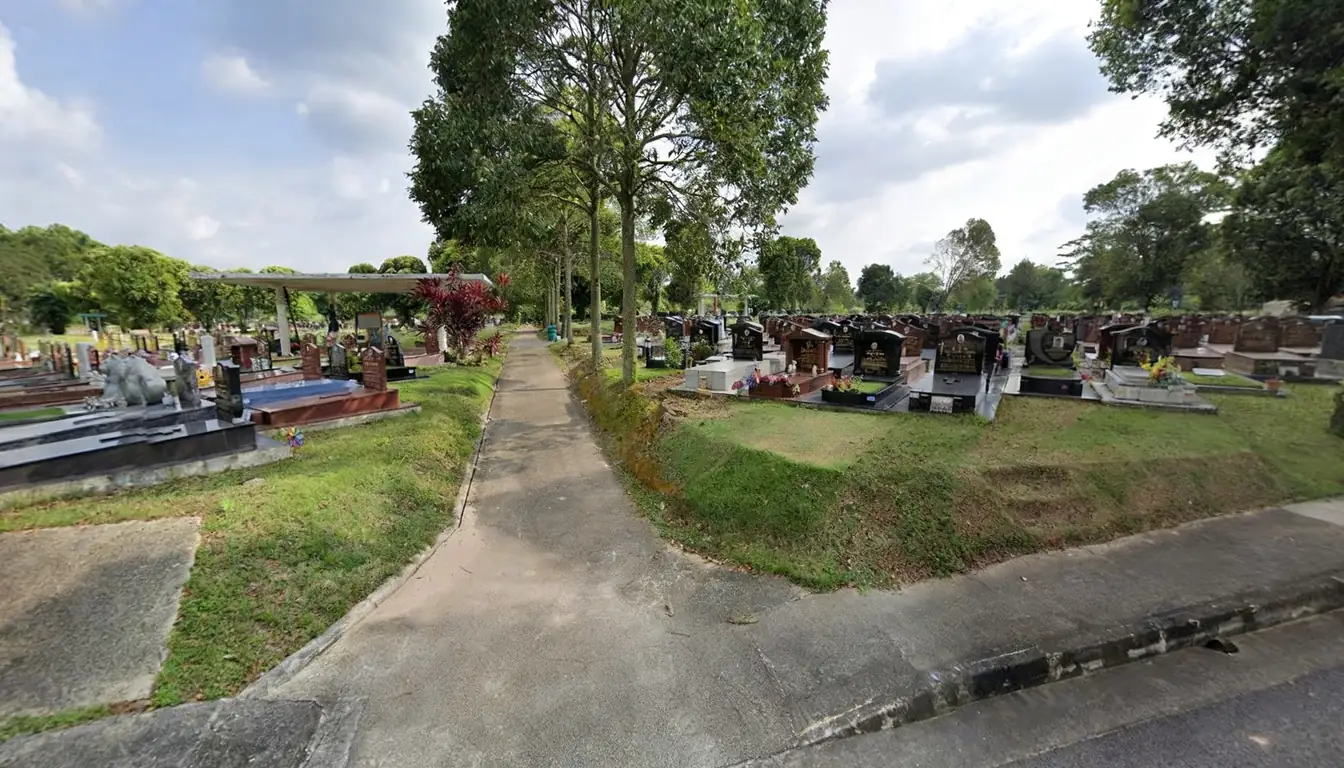
Compassionate Funeral Support When Your Family Needs It
Speak with our funeral team for guidance on exhumation and ash management.